A San Franciscan transport advocacy group, Safe Street Rebel, has found a novel way to further its aims.
Share with friends
The group, which by its own account “fight for car-free spaces, transit equity and the end of car dominance”, believes “people, community and park space must be prioritised over polluting, dangerous and murderous vehicles”.
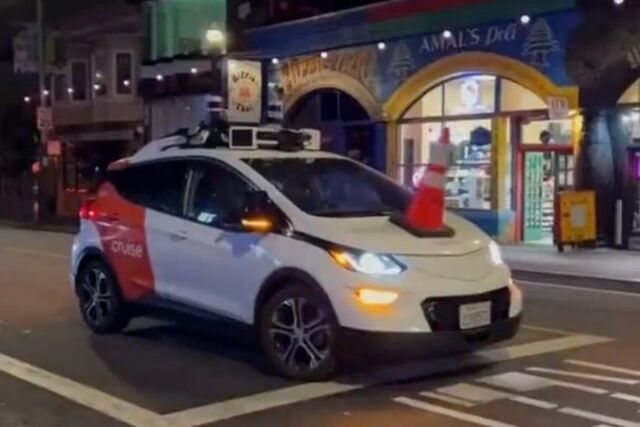
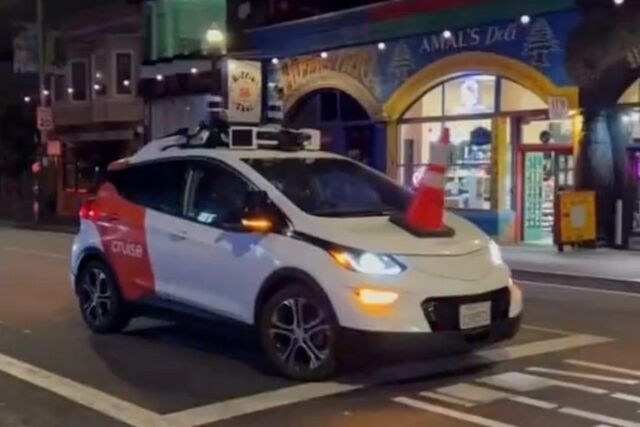
Earlier this week, as part of its “Week of Cone”-campaign, a Tik Tok video posted by the group went viral. In the video, the group encourages its followers, who are opposed to autonomous vehicles (AVs), to start placing the city’s many orange traffic cones on their hoods to disable them.
Over and above being a protest, it is also a way to highlight an important decision by the state regulator on whether to significantly expand robo-taxi services that were due to be made on July 13. This has been delayed until August 10, and Safe Street Rebel believes the delay is a sign of the success of the campaign.
The San Francisco Standard reported that the cones immobilise the autonomous vehicles by forcing them into “shutdown mode” with their hazard lights on, “until the cone is removed, or a company technician comes to reset the car’s system”.
For a substantial amount of time, Google’s Waymo and GM’s Cruise AVs have been causing havoc on the streets of San Francisco, including incidents where the vehicles interfered with emergency response teams and the killing of a dog.
Concerned activists also feel the AVs have become a new form of ubiquitous surveillance to aid the police department.
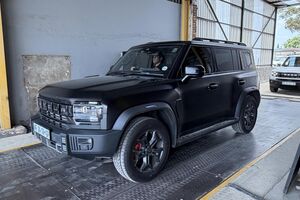
A dispute over the payload ratings of Jetour’s T1 and T2 SUVs has developed further following weighbridge testing in Gauteng, with the Automobile Association (AA) questioning some of the results and Jetour South Africa maintaining that its revised figures have been independently verified.
Chinese vehicle manufacturers continued to record significantly stronger growth than established OEM brands in South Africa during the second quarter of 2026, according to TransUnion's Q2 2026 Mobility Report.
Cars are the ultimate symbol of freedom, independence and individualism. They offer the freedom to ‘go anywhere,’ whenever it suits and with whom one chooses.
South Africa's new energy vehicle market is becoming increasingly diverse, with plug in hybrid electric vehicles (PHEVs) and fully electric vehicles gaining ground while traditional hybrids remain the largest category.
As South Africans celebrate their rich heritage, it is also worth reflecting on a lesser-known chapter of the country's history: its long connection with electric vehicles (EVs).