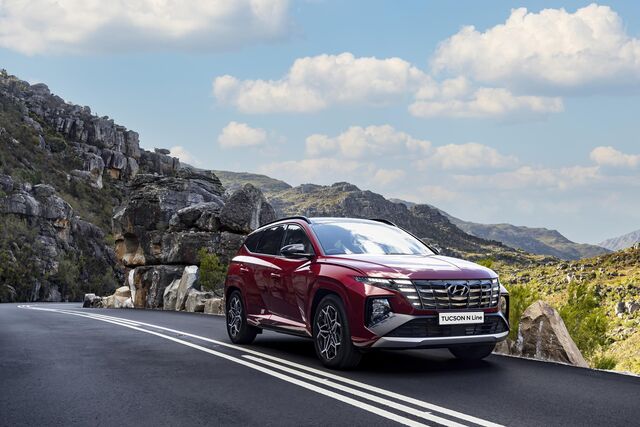
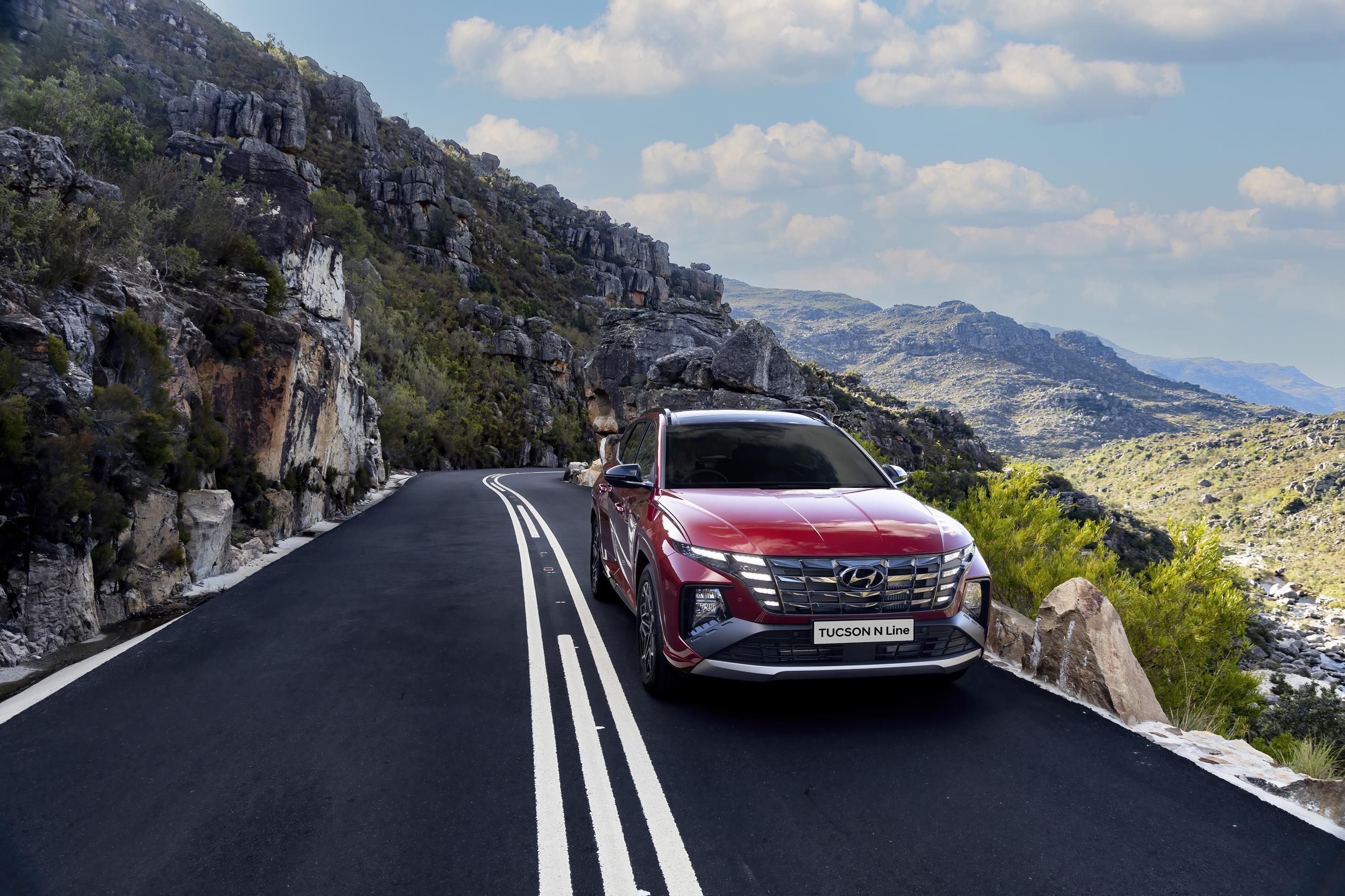
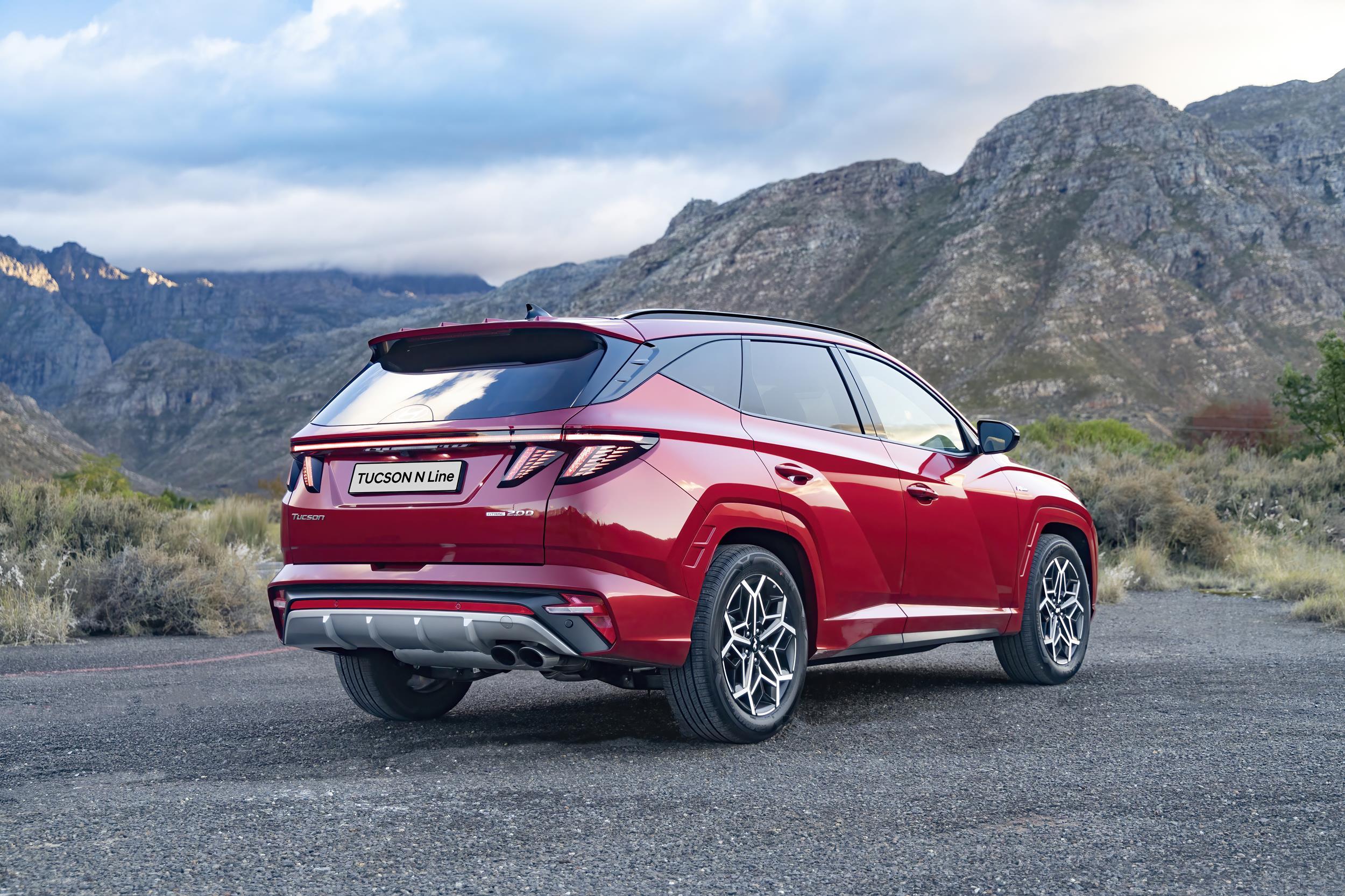
Hyundai added a new flagship, the N Line, to its local Tucson SUV range. Hyundai’s Tucson N Line is not merely a derivative with a new look and some mechanical changes to fit its sporty character.
Share with friends
What’s new?
The dynamic design features are complemented on the Tucson N Line by refined motor-driven power steering (MDPS) and adjusted suspension settings so customers can experience a sportier drive.
Suspension springs on these top Tucson N Line trims offer 5% greater rigidity in the rear set-up and 8% more in the front, while software changes in the steering give a slightly more direct, linear feel at the wheel.
Exterior:
The N Line version offers a more sport- and performance-orientated look, especially through its low and wide stance than other Tucsons.
For the N Line version, the parametric jewel patterns on the grille pieces have been elaborated with edges, creating additional reflections depending on the angle. The grille also incorporates the N Line badge.
Under the grille sits a rectangular-shaped bumper and a refined air intake, which is taller and bigger than on the standard Tucson.
At the rear, the N Line is fitted with an aerodynamic spoiler that is longer than that of the standard model and garnished with fins. The lower rear is accentuated by a red reflector band and a diffusor with aggressive twin-tip muffler exhausts.
The new Tucson N Line is equipped with new 19-inch alloy wheels.
Interior:
Inside are N-branded sporty seats with black suede and leather seat coverings, as well as red stitching. Red stitching is also woven on the door trim and armrest, while the grey cloth crash pad is garnished with red accents.
A dedicated steering wheel comes complete with an N logo. Other N design elements are to be found on the leather gear shift knob.
Engine:
The Tucson N Line’s 2-litre turbocharged CRDi diesel engine is paired with a Hyundai-developed eight-speed automatic transmission and HTRAC All-Wheel Drive (AWD) system. The turbocharged 1 998 cc engine delivers up to 137 kW and 416 Nm torque.
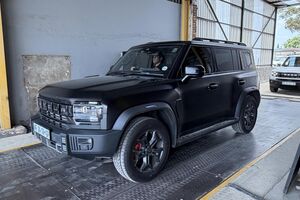
A dispute over the payload ratings of Jetour’s T1 and T2 SUVs has developed further following weighbridge testing in Gauteng, with the Automobile Association (AA) questioning some of the results and Jetour South Africa maintaining that its revised figures have been independently verified.
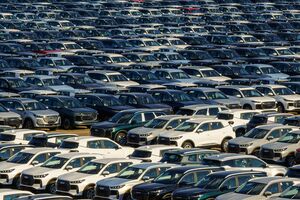
Chinese vehicle manufacturers continued to record significantly stronger growth than established OEM brands in South Africa during the second quarter of 2026, according to TransUnion's Q2 2026 Mobility Report.
The JMC Grand Avenue is a new double-cab bakkie aimed at buyers who need a vehicle that can serve as family transport, a leisure companion and a capable workhorse. As JMC's flagship bakkie, it enters one of South Africa's most competitive vehicle segments with an emphasis on space, technology and practicality.
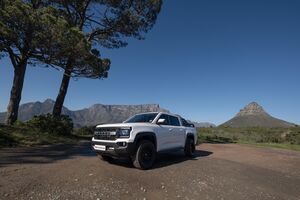
JAC Motors South Africa has introduced two new derivatives to its T9 bakkie range, the Hunter Black Edition and Super Lux Black Edition. These additions form part of the company’s Decade campaign, marking nearly ten years of operations in the country.