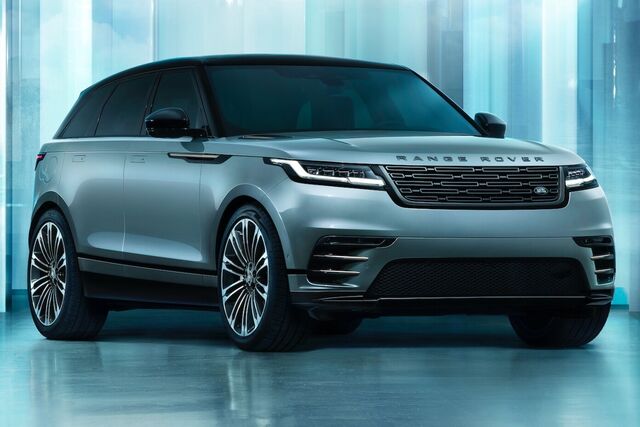
Land Rover has made some changes to its Range Rover Velar range that sit between the Range Rover Evoque and close to the bigger and more expensive Range Rover Sport.
Share with friends
The Velar’s competition is the Porsche Macan, BMW X5, Mercedes-Benz GLE and Jaguar’s I- and F-Pace models.
So, what’s changed?
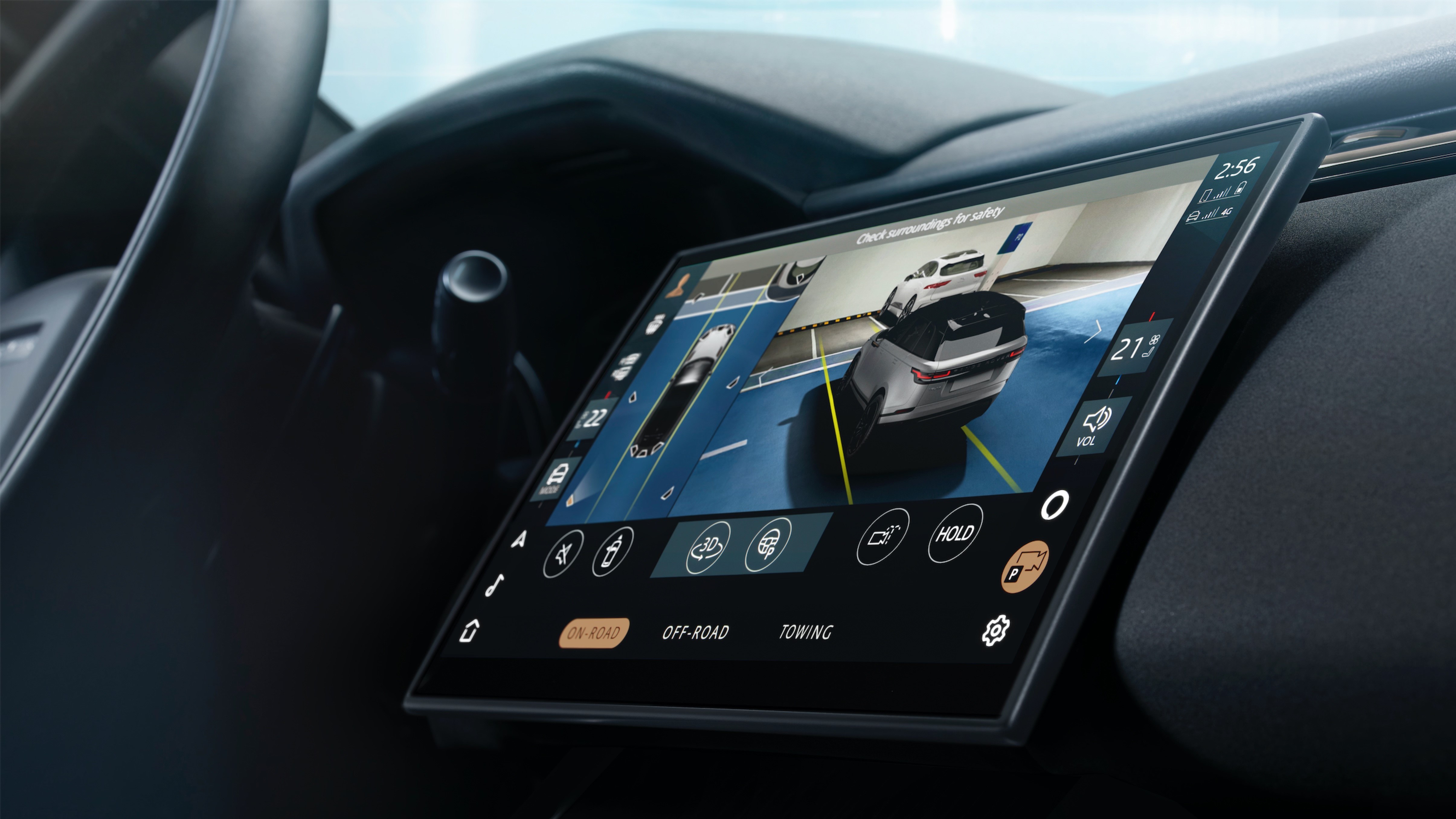
On the inside and outside quite a few things, although not all is noticeable at first glance. It now boasts a larger floating curved glass touchscreen of 11.4 inches providing access to all key vehicle functions.
It is claimed that the Velar is the quietest vehicle owing to its Active Road Noise Cancellation available with flagship MeridianTM sound system. This technology senses external frequencies and automatically processes an anti-noise through the audio system, reducing overall interior noise levels by at least 4dB – the equivalent of turning the volume down by four steps.
For wireless updates, the “software over the Air4” updates 80 percent of ECUs, covering Pivi Pro6, navigation, on-board diagnostics, chassis and powertrain – with no need to visit a dealer.
Emissions have been reduced to zero at the tailpipe, assuming you’re charging only at home and based on anonymised ownership data from Range Rover Velar customers. A new larger 19.2kWh lithium-ion battery now offers 21 percent range improvement with an EV range of up to 64km.
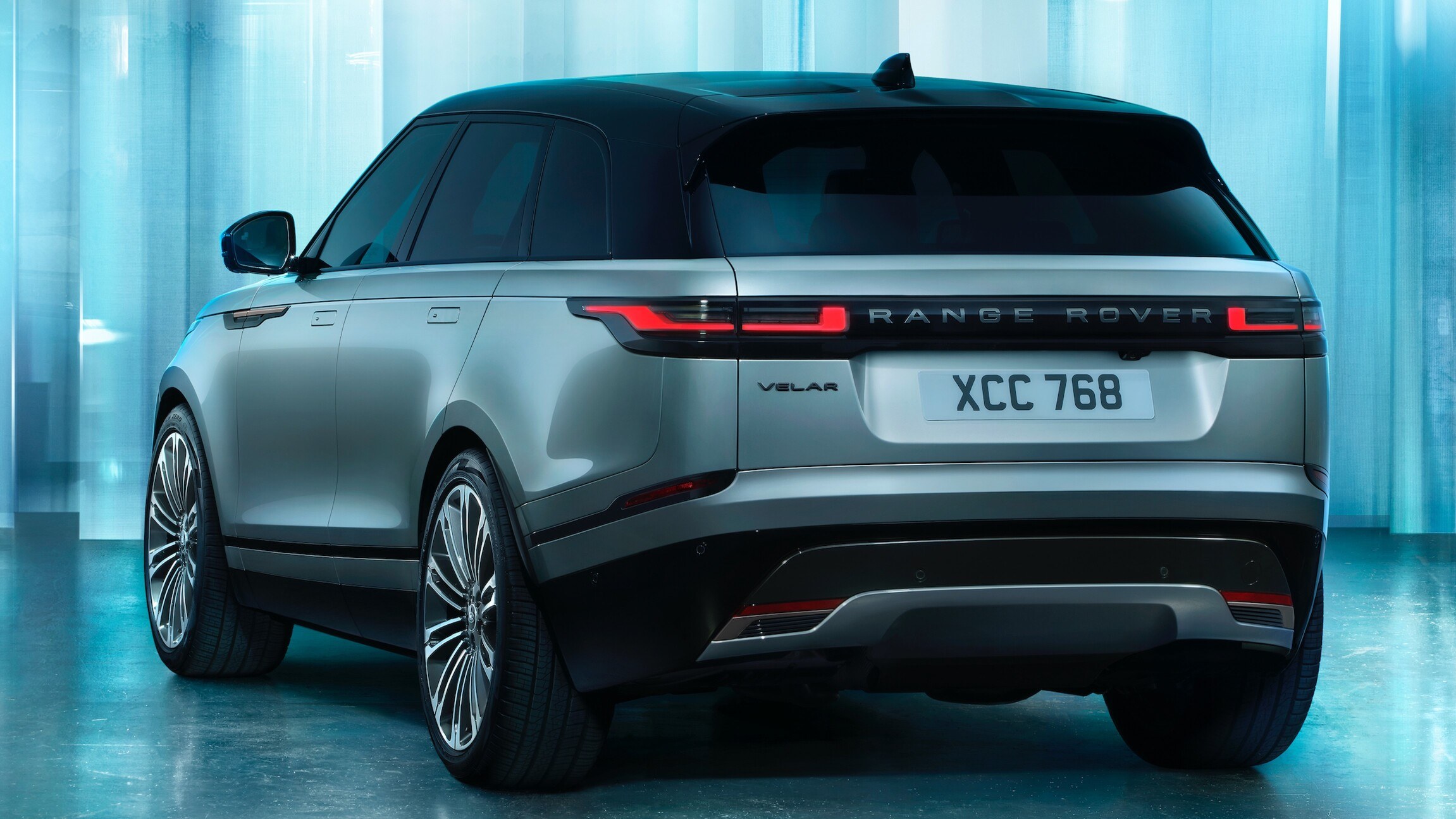
Seeing better at night is thanks to new Pixel LED headlights with Dynamic Bend Lighting technology and complemented by super-red LED taillights for better visibility.
The Velar is now leather-free with Kvadrat wool and polyurethane textiles blended for a bespoke finish and new seat design. The new fabric is said to be 58% lighter than leather.
Colours:
And if you are not a fan of the different shades of black, white and grey on offer, the good news is the manufacturer will add some more colour choices. Although maybe not red and green, Metallic Varesine Blue and, yes another grey, Premium Metallic Zadar Grey, has been added.
Engines:
The P400e plug-in electric hybrid has a range of 64km. With the added benefit of rapid DC-charging capability, clients will be able to complete daily journeys using EV power more easily than ever.
The P400e is one of very few plug-in electric hybrid vehicles capable of rapid DC charging, with a 0-80 percent charge possible in as little as 30 minutes away from home using a 50kW charger. At home, it can charge from 0-100 percent using a 7kW AC charger in around two and a half hours.
The range:
Electric Hybrid
P400e (2.0-litre four-cylinder petrol PHEV, 297kW and 640Nm) with an eight-speed automatic gearbox.
P340 (3-litre six-cylinder petrol MHEV, 250kW and 480Nm) with and eight-speed automatic gearbox.
Petrol
Diesel
D200 (2.0-litre four-cylinder diesel, 146kW and 430Nm) with an eight-speed automatic gearbox.
D300 (3.0-litre six-cylinder diesel, 221kW and 650Nm) with an eight-speed automatic gearbox.
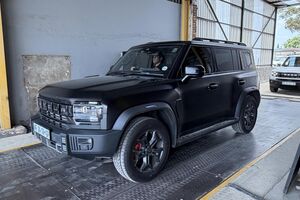
A dispute over the payload ratings of Jetour’s T1 and T2 SUVs has developed further following weighbridge testing in Gauteng, with the Automobile Association (AA) questioning some of the results and Jetour South Africa maintaining that its revised figures have been independently verified.
Chinese vehicle manufacturers continued to record significantly stronger growth than established OEM brands in South Africa during the second quarter of 2026, according to TransUnion's Q2 2026 Mobility Report.
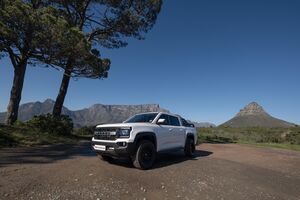
The JMC Grand Avenue is a new double-cab bakkie aimed at buyers who need a vehicle that can serve as family transport, a leisure companion and a capable workhorse. As JMC's flagship bakkie, it enters one of South Africa's most competitive vehicle segments with an emphasis on space, technology and practicality.
JAC Motors South Africa has introduced two new derivatives to its T9 bakkie range, the Hunter Black Edition and Super Lux Black Edition. These additions form part of the company’s Decade campaign, marking nearly ten years of operations in the country.