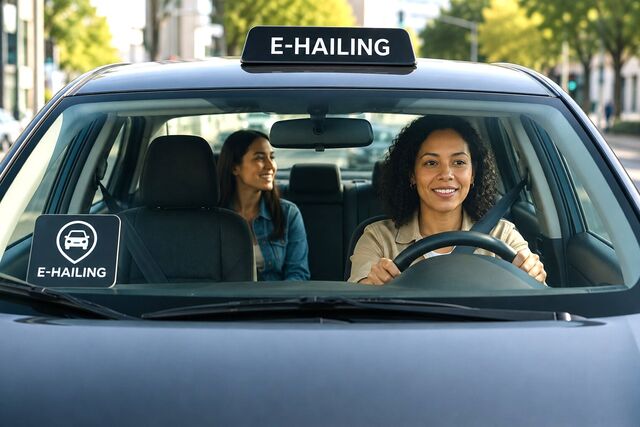
While app-based transport has introduced new levels of accountability through GPS tracking, driver verification and emergency assistance, concerns around gender-based violence and harassment continue to shape the conversation.
The Department of Transport has recognised e-hailing as an important part of South Africa's public transport network through the National Land Transport Amendment Act, which provides a legal framework for these services.
The legislation aims to improve oversight and accountability across the industry, while companies continue to invest in technology and policies designed to make journeys safer for passengers and drivers alike.
Although Uber, Bolt and inDrive all say they are committed to improving safety for women, none publicly disclose how many women drive on their South African platforms or what percentage of local passengers are women. As a result, verified South African figures are not available.
Safety starts before the trip:
All three major e-hailing platforms encourage passengers to verify the driver's identity before entering a vehicle by checking the registration number, vehicle make and model, and the driver's photograph displayed in the app.
Uber says that "Safety is built into every step of the Uber experience." The company has developed a range of features including GPS trip tracking, live trip sharing with trusted contacts, RideCheck technology that detects unusual stops or route deviations, encrypted communications between drivers and riders, and an in-app emergency assistance button. Uber also allows users to report incidents directly through the app, with dedicated safety teams available to investigate reports.
Bolt offers similar features, including real time trip monitoring, anonymous phone numbers that prevent riders and drivers from seeing each other's personal contact details, emergency assistance and the ability to share live trip information with friends or family. Bolt says, "Safety is at the heart of everything we do," adding that it continuously develops new technology and works with safety experts to improve its platform.
InDrive also incorporates GPS tracking, driver verification, trip sharing and an emergency assistance function within its app. The company says that safety remains one of its highest priorities and encourages both drivers and passengers to report any behaviour that violates its community standards.
Features designed specifically for women:
Several platforms have introduced initiatives aimed specifically at improving women's confidence when using e-hailing services.
Bolt's Women for Women category allows female drivers to accept trips only from women while female passengers can request rides from women drivers where the feature is available. Bolt says the initiative was developed to provide "a safer and more comfortable ride experience for women."
Uber has expanded its Women Rider Preference feature in a growing number of international markets, allowing female drivers to receive trip requests primarily from women riders. While the feature is not yet available everywhere, Uber says it is intended to provide women with more choice and flexibility. The company has also partnered with organisations such as #Gigsister, which supports women entering the gig economy by providing training, mentoring and business opportunities for female drivers.
Although inDrive has not introduced a women only matching feature in South Africa, it says its safety systems are designed to protect every user through verified profiles, transparent trip information and rapid incident reporting.
Protecting women behind the wheel:
Safety concerns are not limited to passengers. Female drivers often work irregular hours, collect passengers from unfamiliar locations and may encounter intoxicated or abusive customers.
Uber encourages drivers to trust their instincts and cancel trips if they feel unsafe. Drivers can share their location in real time with family members, contact emergency services directly from the app and report inappropriate rider behaviour. Uber says users who violate its Community Guidelines may permanently lose access to the platform.
Bolt has similar policies. Drivers can report incidents immediately through the app and passengers who repeatedly breach the platform's standards may be suspended or removed. The company says every report is reviewed by dedicated safety specialists.
InDrive advises drivers never to compromise their personal safety, encourages them to report inappropriate conduct and makes emergency assistance available through its platform.
Technology cannot solve the problem alone:
Safety experts generally agree that app-based transport provides significantly greater accountability than anonymous street hails. Every journey leaves a digital record, including GPS data, driver and passenger profiles, payment information and trip history, all of which can assist investigations if incidents occur.
However, the platforms also stress that technology is only one part of the solution. Passengers should always confirm vehicle details before entering the car, share their trip with someone they trust when travelling alone, avoid revealing unnecessary personal information and immediately report anything that makes them feel uncomfortable. Drivers are similarly encouraged to avoid situations that feel unsafe and make full use of the safety features available within their apps.
Official sources: