
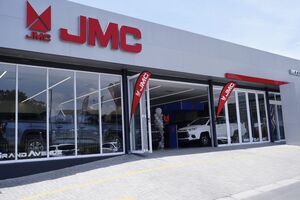
JMC Woodmead celebrates first month of business
Bidvest McCarthy JMC Woodmead celebrated its first month of business in its new flagship showroom in Woodmead this week.
- Dealer News
- 18 November 2026
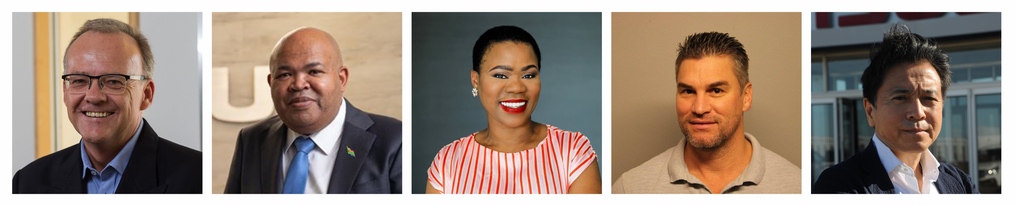
KANU Commercial Body Construction announced the appointment of its new Board recently.

Newly appointed Board Chairman Billy Tom (Isuzu Motors South Africa Chief Executive Officer and Managing Director) leads a dynamic new KANU Board consisting of Mandlakazi Sigcawu (Isuzu Motors South Africa Executive: Corporate and Public Affairs), Duvan de Ridder (KANU: Finance Manager), Michiyuki Miura (Isuzu Motors South Africa Chief Financial Officer) and Ingo Epler-Brandenburg (KANU Commercial Body Construction Chief Operating Officer).
KANU Commercial Body Construction is a wholly-owned subsidiary of Isuzu Motors South Africa, which operates independently and was established in 2015 to create extended value to commercial vehicle customers.
This strategic business move has ensured that Isuzu, together with KANU, has the capacity to initiate and build products according to client specifications. KANU specialises in the design and manufacturing of innovative body applications and custom-built solutions.
“KANU is known for its innovative solutions and the company continues to create the required solution for you – no matter how high, remote or off-road the work may be. Our aim, as the incoming board, is to continue with the hard work,” said Ingo Epler-Brandenburg, KANU Commercial Body Construction’s Chief Operating Officer.
For the first time, a woman has been appointed to the KANU Board, with the selection of Mandlakazi Sigcawu. Sigcawu recently joined Isuzu as Department Executive: Corporate and Public Affairs and comes with a wealth of leadership experience.
She previously held a leadership role at a Fortune 500 company, where she was the Head of Communication and Transformation, managing projects across East and Southern African markets.

Bidvest McCarthy JMC Woodmead celebrated its first month of business in its new flagship showroom in Woodmead this week.
Combined Motor Holdings (CMH) has appointed Charles Webber as the new Group CEO.
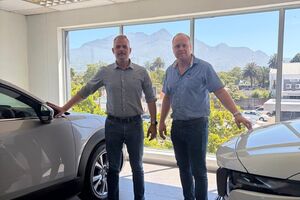
Mazda Southern Africa has welcomed Group1 Mazda Southern Cape to its dealer network, strengthening the brand’s presence in the Southern Cape and creating a new home for Mazda customers in George and the surrounding region.
 Advertisement
 Advertisement
I have bad reflexes. I was once run over by a car being pushed by two guys
Woody Allen
Combined Motor Holdings (CMH) has appointed Charles Webber as the new Group CEO.
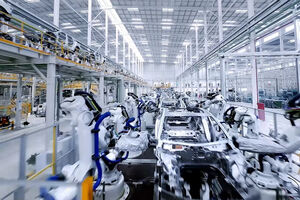
Cheap labour and state subsidies are the usual explanations for Chinese car prices. Research from think tanks and universities suggest the answer is far more complicated.
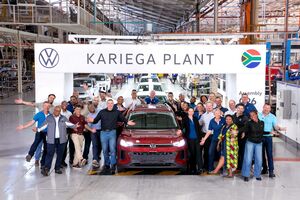
The first Volkswagen Tengo destined for an African customer rolled off the production line at Plant Kariega on 9 November 2026, making history in more ways than one.