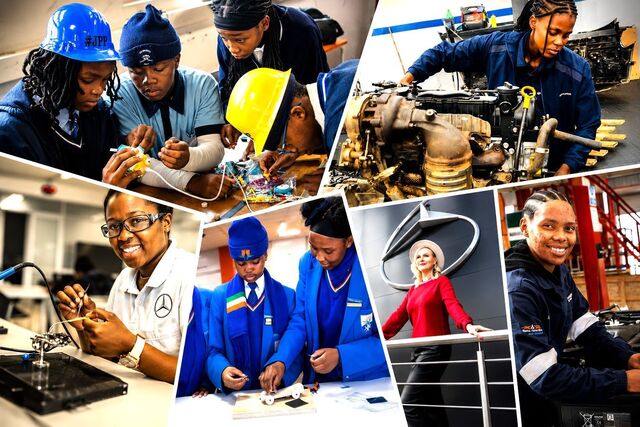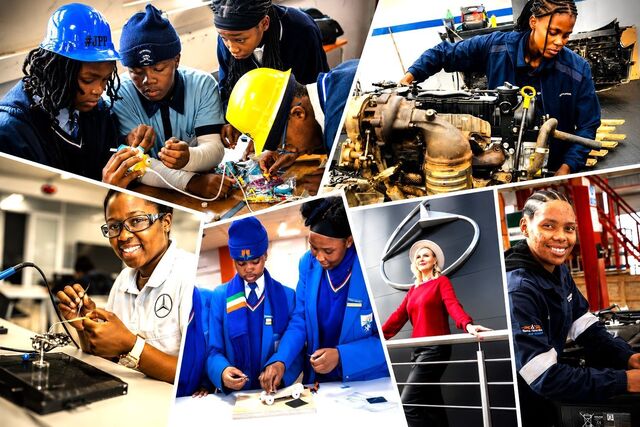
Traditionally dominated by men, particularly in manufacturing plants, workshops and engineering departments, the sector is increasingly attracting women into careers ranging from vehicle technicians and engineers to dealership managers, executives and entrepreneurs. This transformation is being driven by government policy, industry initiatives, bursaries, apprenticeships and targeted leadership programmes.
According to The Automotive Business Council |naamsa, transformation and skills development are among the six strategic pillars of the South African Automotive Masterplan (SAAM) 2035, which aims to strengthen the industry's competitiveness while creating sustainable employment and developing a skilled workforce capable of supporting future technologies.
A changing industry:
The automotive industry remains one of South Africa's largest manufacturing sectors, contributing around 5% of the country's gross domestic product and supporting well over 110 000 direct manufacturing jobs, with hundreds of thousands more employed throughout the retail, component manufacturing, logistics and aftermarket sectors. As vehicle technology evolves, so too do the skills required to support it.
While comprehensive national statistics showing the number of women employed across every automotive occupation are not yet available, there is clear evidence that female participation has increased steadily over the past decade.
Women are increasingly working as vehicle technicians, auto electricians, service advisers, sales executives, quality controllers, production specialists, logistics managers, engineers, finance professionals and dealership executives. Electric vehicles, advanced driver assistance systems, connected vehicles and digital diagnostics are also creating new career opportunities that rely more on technical expertise than physical strength.
According to the Department of Trade, Industry and Competition (dtic), the Automotive Investment Scheme has approved more than R108 billion in investment across more than 700 projects since its introduction, creating nearly 29 000 additional jobs while supporting long term industrial growth and skills development.
Training is opening doors:
According to naamsa, developing industry relevant skills is essential if South Africa is to remain globally competitive as vehicle technology continues to advance. The organisation says the Automotive Masterplan places strong emphasis on preparing workers for future manufacturing methods, electrification and digitalisation.
Manufacturers are supporting this objective through apprenticeships, graduate programmes, internships and bursaries aimed at attracting more young people into technical careers. Increasingly, these programmes are encouraging female applicants.
A good example comes from Hyundai Automotive South Africa.
According to recent reporting in Dealerfloor, Hyundai's national apprenticeship programme currently includes 338 apprentices, of whom 80 are women, meaning almost one in four apprentices are now female. While women remain a minority, the figures illustrate how manufacturers are actively working to improve gender representation in workshop environments.
There were also reporting on Lathitha Mbambo, a young apprentice technician at Hyundai Bellville, whose performance has become an example of what can be achieved when women are given opportunities in technical roles. During her apprenticeship she serviced around 100 vehicles a month, completed work on more than 800 vehicles and maintained a 100% record with no vehicle comebacks, demonstrating that success depends on skill, commitment and quality rather than gender.
Government support is reinforced through initiatives by merSETA, which continues to fund artisan development, apprenticeships and learnerships across the manufacturing and retail motor sectors, helping to create a pipeline of qualified technicians for the future.
Beyond the workshop:
Today women are finding opportunities in manufacturing engineering, robotics, software development, supply chain management, logistics, finance, marketing, product planning, battery technology, dealership management and executive leadership.
Using Hyundai again as an example where Cindy Potso, who became Hyundai Automotive South Africa's first Black female dealer principal. She said during an interview she hoped her appointment would encourage more women to pursue leadership positions within the retail motor industry.
Dealerfloor
has also reported on the Future Dealership Development Programme, a partnership between naamsa, NADA, the Automotive Industry Transformation Fund (AITF) and the Tshwane University of Technology. The programme aims to develop a new generation of dealership leaders, with particular emphasis on creating opportunities for women and previously disadvantaged entrepreneurs to own and manage dealerships.
These initiatives recognise that transformation is not only about increasing the number of women employed in the industry, but also ensuring they are represented in management, ownership and decision making positions.
Challenges remain:
One of the biggest challenges begins at school level, where relatively few girls pursue mathematics, science and engineering subjects that provide a pathway into automotive careers. This reduces the number of women entering artisan training, engineering degrees and advanced manufacturing programmes.
The industry also continues to face perceptions that workshop and engineering careers are primarily suited to men, despite modern workshops relying increasingly on computer diagnostics, electronics and specialised equipment rather than physical labour alone.
Industry leaders point to the importance of mentorship, supportive workplace cultures, equal career advancement opportunities and visible female role models to encourage more young women to consider automotive careers.
Another challenge is the shortage of comprehensive gender specific employment statistics across the automotive value chain. Better industry data would help government, manufacturers and industry bodies measure progress more accurately and identify areas where additional support is needed.
- Official sources: naamsa (South African Automotive Masterplan 2035); Department of Trade, Industry and Competition; merSETA; NADA; Automotive Industry Transformation Fund; International Labour Organisation; Hyundai Automotive South Africa, Dealerfloor.
- Some of the articles published on Dealerfloor about woman’s successes in the automotive industry:
https://dealerfloor.co.za/dealer-news/women-powering-hyundai
https://dealerfloor.co.za/dealer-news/hyundais-renske-sets-high-excellence-standards-for-financial-discipline
https://dealerfloor.co.za/industry-news/volvo-trucks-donates-truck-to-train-more-female-drivers
https://dealerfloor.co.za/dealer-news/one-in-four-hyundai-apprentices-now-women
https://dealerfloor.co.za/industry-news/marcia-scoops-up-another-top-award
https://dealerfloor.co.za/dealer-news/basadi-automotive-group-women-power-in-action
https://dealerfloor.co.za/dealer-news/getting-it-right-the-first-time