

Chery names its first bakkie Grootman
Chery has named its first bakkie for South Africa Grootman, a name chosen by South Africans. The model is planned to make its local debut in the first quarter of 2027.
- Product News
- 2 October 2026
Dealer principals were not surprised that Finance Minister Tito Mboweni did not even mention a call by the auto trade to lower taxes on new vehicles in his 2020 medium-Term Budget Policy Statement.

Instead DPs and Sales Managers are braced for government to extract even more revenue from long-suffering motorists.
Naamsa in September sent a proposal to government to show how lowering taxes on cars to 35% and 38% could lead to over 28,000 new sales, some 4,000 new jobs in the auto trade and additional revenue for the fiscus.
But instead of less taxes, Mboweni warned both the general fuel levy and RAF tax could be raised in 2021 to recoup the losses government inflicted on SA’s economy with some of the strictest lockdown measures in the world. The General Fuel and Road Accident Fund levies currently add some 40% to every litre of fuel sold. With all the levies and duties on fuel added, a motorist pays roughly R300 in taxes on every 50 liters of fuel.
This after government had in May quietly increased the tax on double cab bakkies and both increased and extended the CO2 emissions tax on small cars, causing price increases on these two popular segments at the height of lockdown. The emissions tax on SA’s top-selling passenger car, the VW Polo Vivo, more than doubled from just over R3,400 in May to around R7,200 in April.
Currently, the total taxes on a new car add up to 18,5% for an entry-level vehicle and shoots up to almost half the vehicle’s asking price (45%) for cars with a selling price over R850 000.
Naamsa chief executive Mikel Mabasa stated that removing the carbon dioxide emissions tax and reducing the ad valorem levy — a tax on items considered a luxury in Mzansi — could boost new vehicle sales by almost 28,400.
Naamsa’s presentation showed changes just two taxes on vehicles could create some 4,000 jobs across the industry. Removing the sales tax would result in an additional R1 billion for treasury, while the reduction in the ad valorem tax would have a neutral impact, as higher sales would offset the lower rate of tax per vehicle.
‘High taxes always create a demand for contraband’
Discussing car sales on Moneyweb, head Strategy and Business Analytics at Absa Vehicle Finance Consumer Henry Both pointed out another danger raised by Naamsa after radio host Ryk van Niekerk pointed out high taxes always create a demand for contraband, which in South Africa means people driving “grey imports” from neighbouring countries.
Botha agreed that this is a big worry. Naamsa estimates that 30 000 used vehicles are illegally imported to South Africa a year, with current estimates that some 300 000 of South Africa’s 12,7 million cars are these “gray imports”.

Botha said while cars arrive at bonded warehouses in Durban and Cape Town destined for export to the rest of Africa, many vehicles remain behind. “I hope it is something our government and police will do something about. These cars are just dumped in SA and can have a big shock on our job numbers,” Botha said.
He said half a dozen taxes were levied on each new car, including 15% Vat, import duties, ad valorem tax, the tyre levy, the CO2 emissions levy and more recently an export levy, which has Naamsa hot under the collar.
In their report, Mabasa stressed that no other country adds an export levy and this could potentially lead to fewer vehicle exports from South Africa, which will negatively impact on the industry foreign exchange earnings and trade balance.

Chery has named its first bakkie for South Africa Grootman, a name chosen by South Africans. The model is planned to make its local debut in the first quarter of 2027.
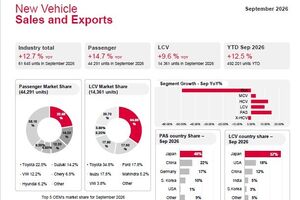
South Africa’s new vehicle market recorded aggregate domestic sales of 61 645 units in September 2026, an increase of 12.7% compared with the 54 706 units sold during September 2025.
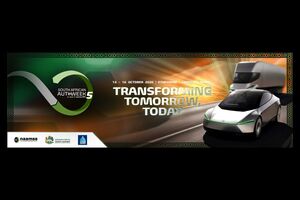
SA Auto Week 2026 is scheduled to take place in eThekwini, KwaZulu-Natal, from 13 to 16 October, with the event marking five years of SA Auto Week.
 Advertisement
 Advertisement
Cars are the ultimate symbol of freedom, independence and individualism. They offer the freedom to ‘go anywhere,’ whenever it suits and with whom one chooses.
Sarah Redshaw
South Africa’s new vehicle market recorded aggregate domestic sales of 61 645 units in September 2026, an increase of 12.7% compared with the 54 706 units sold during September 2025.
SA Auto Week 2026 is scheduled to take place in eThekwini, KwaZulu-Natal, from 13 to 16 October, with the event marking five years of SA Auto Week.
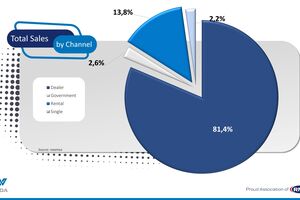
South Africa’s domestic new-vehicle market strengthened in September, recording 61 645 sales, its highest monthly total of 2026. Sales increased by 3 747 vehicles, or 6.5%, from August’s originally reported total and were 12.7% higher than in September 2025.