NADA on the question of whether South Africa turned a corner
As South Africa navigates a shifting and often unpredictable economic landscape, the National Automobile Dealers’ Association (NADA) says there are growing signs of improvement that could support increased confidence across the new-vehicle market, even as several structural challenges remain.
Share with friends
Brandon Cohen, NADA Chairperson, noted that recent macroeconomic signals have been encouraging. “We’re seeing interest rates beginning to ease, rand volatility settling, and far greater operational stability from Eskom and Transnet,” he says. “Alongside better-than-expected GDP performance, these factors are creating a more supportive environment for both consumers and businesses.”
Dealers are reporting slightly improved, though still cautious, consumer confidence, supported by more favourable financing conditions. Stabilising economic indicators are also encouraging renewed interest from fleet buyers, while opportunities for well-structured dealer incentives are helping to ease pressure on household budgets.
However, Brandon stresses that these improvements need to be considered alongside ongoing challenges. “Municipal deterioration concerns around crime and the effectiveness of law enforcement as well as political uncertainty ahead of the 2026 municipal elections all continue to weigh on public sentiment,” he says.
Brandon Cohen (NADA Chairperson).
Factors that may influence 2026:
While it’s always difficult to predict how the year ahead will unfold, there are a few developments, both locally and globally, worth watching.
Local government elections:
South Africa’s municipal elections in 2026 may shape public mood and service-delivery priorities. With new parties entering the space and shifting political dynamics, the months leading up to the elections could influence overall sentiment.
US mid-term elections:
Political outcomes in the United States often ripple through global markets. While the direct impact on South Africa is difficult to quantify, shifts in US policy and economic direction may influence global trade and investor confidence.
The AI bubble:
AI continues to expand rapidly across industries worldwide. Whether this growth strengthens further or starts to level out is something many sectors are watching closely. Any shift in the pace of AI adoption could influence job structures and economic opportunities, particularly in developing markets.
GDP growth potential:
Recent improvements in electricity stability, port performance and ratings-agency sentiment are encouraging. The question for 2026 is whether these gains can hold long enough to support broader economic growth and job creation.
New vehicle market entrants:
After a busy year of model introductions, particularly from Indian and Chinese brands, the pace of new entries may begin to ease as the market adjusts to the increased variety.
FIFA men’s world cup:
A lighter point, but still meaningful for national morale: South Africans will be rallying behind the team, and a positive showing could add a welcome boost to public optimism.
A cautiously optimistic outlook:
“These shifts, both at home and internationally, highlight how many moving parts influence our environment,” Brandon says.
“While nothing is guaranteed, there is room for cautious optimism if the current momentum continues. Our dealership networks will keep prioritising value, transparency and service as we navigate the road ahead.”
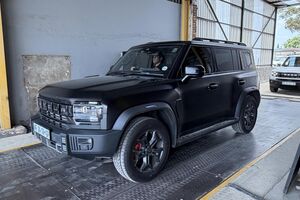
A dispute over the payload ratings of Jetour’s T1 and T2 SUVs has developed further following weighbridge testing in Gauteng, with the Automobile Association (AA) questioning some of the results and Jetour South Africa maintaining that its revised figures have been independently verified.
Chinese vehicle manufacturers continued to record significantly stronger growth than established OEM brands in South Africa during the second quarter of 2026, according to TransUnion's Q2 2026 Mobility Report.
Cars are the ultimate symbol of freedom, independence and individualism. They offer the freedom to ‘go anywhere,’ whenever it suits and with whom one chooses.
A dispute over the payload ratings of Jetour’s T1 and T2 SUVs has developed further following weighbridge testing in Gauteng, with the Automobile Association (AA) questioning some of the results and Jetour South Africa maintaining that its revised figures have been independently verified.
Chinese vehicle manufacturers continued to record significantly stronger growth than established OEM brands in South Africa during the second quarter of 2026, according to TransUnion's Q2 2026 Mobility Report.
South African consumers face growing pressure on household finances after the South African Reserve Bank raises interest rates, adding to a range of rising costs that are already influencing vehicle purchasing decisions.