

Chery names its first bakkie Grootman
Chery has named its first bakkie for South Africa Grootman, a name chosen by South Africans. The model is planned to make its local debut in the first quarter of 2027.
- Product News
- 2 October 2026
New vehicle sales are expected to grow by single digits in both 2022 and 2023 in line with the projected GDP growth rates of around 1.8% for South Africa in those years, says naamsa president, Neale Hill.
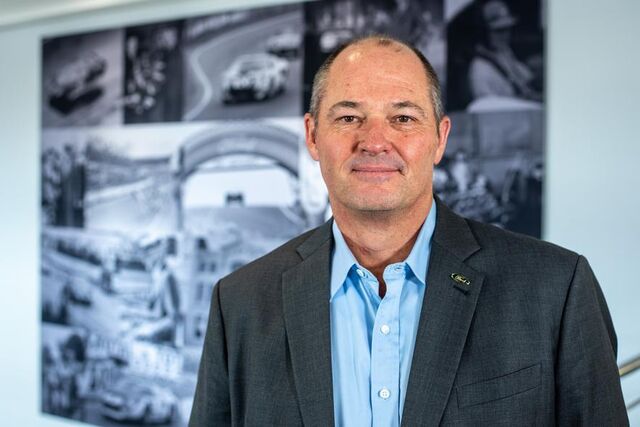
Sales will also only reach pre-COVID-19 levels again in 2023, says Hill, who is also the MD of Ford South Africa, at a naamsa
CEO dinner last week.
Hill says the automotive industry, locally and globally, has not been insulated from the impact of COVID-19 as government restrictions to keep communities safe impacted on the trading activities of vehicle manufacturers' customers, which led to changes in consumer purchasing behaviours and volatile new vehicle sales.
He says this year was also characterised by a number of adverse events, with severe consequences for the automotive industry, including the unrest and protests in July in KwaZulu-Natal and Gauteng, Eskom power supply challenges and the five-week National Union of Metalworkers of South Africa (Numsa) strike in the steel sector, which resulted in delays in the delivery of some mission-critical and locally produced components.
Hill says the new-vehicle market has achieved a robust recovery year-to-date to October 2021 of 27.2% compared to the severely COVID-19-affected corresponding period 2020.
“naamsa’s initial projection for 2021, in close correlation with the projected GDP growth rate of 3.3% for the year at the time, was for a year-on-year increase of just over 15% compared to 2021.
“The GDP growth rate forecast for 2021 for South Africa has been revised upward a few times to around 5.2% and it seems as if the full year 2021 new vehicle market will, in line with the improved economic climate, reflect an increase of around 20% year-on-year.
“This is, however, still around 15% below the pre-COVID-19 level of 2019,” he says.
Hill says that since 75% of passenger cars are imported, vehicle imports are expected to increase in line with the recovery in the domestic new-vehicle market while vehicle exports are expected to reflect strong upward momentum in 2022 and 2023, which will support vehicle production.
He says vehicle exports suffered this year from, among other factors, the aftermath of the cyberattack on Transnet’s operations and the Force Majeure declared during the third quarter of 2021.
“Consequently, from being 65.8% ahead for the first six months of 2021 compared to the same period in 2020 and on par with the record export performance of 2019, vehicle exports ground to a halt during the third quarter to now only being 24.2% ahead for the first nine months of 2021 compared to the same period in 2020 – still 22.5% below the pre-COVID-19 level of the corresponding period in 2019,” he says.
However, Hill says it is anticipated that several new model introductions by major vehicle exporters in 2021 and 2022, along with increased demand linked to the favourable economic conditions abroad, will provide the impetus for vehicle exports to regain their strong upward momentum over the short to medium term.
Chery has named its first bakkie for South Africa Grootman, a name chosen by South Africans. The model is planned to make its local debut in the first quarter of 2027.
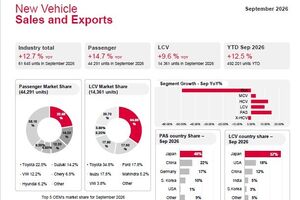
South Africa’s new vehicle market recorded aggregate domestic sales of 61 645 units in September 2026, an increase of 12.7% compared with the 54 706 units sold during September 2025.
SA Auto Week 2026 is scheduled to take place in eThekwini, KwaZulu-Natal, from 13 to 16 October, with the event marking five years of SA Auto Week.
 Advertisement
 Advertisement
Cars are the ultimate symbol of freedom, independence and individualism. They offer the freedom to ‘go anywhere,’ whenever it suits and with whom one chooses.
Sarah Redshaw
South Africa’s new vehicle market recorded aggregate domestic sales of 61 645 units in September 2026, an increase of 12.7% compared with the 54 706 units sold during September 2025.
SA Auto Week 2026 is scheduled to take place in eThekwini, KwaZulu-Natal, from 13 to 16 October, with the event marking five years of SA Auto Week.
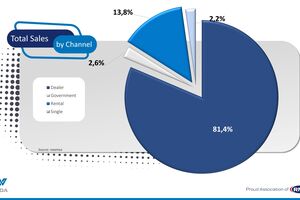
South Africa’s domestic new-vehicle market strengthened in September, recording 61 645 sales, its highest monthly total of 2026. Sales increased by 3 747 vehicles, or 6.5%, from August’s originally reported total and were 12.7% higher than in September 2025.