Ford South Africa is making changes to its powertrain offerings for the Ranger bakkie and Everest SUV ranges. It is good news for buyers of these vehicles, but not so for the workers who will lose jobs at the manufacturers’ plants in Gauteng and the Eastern Cape.
Share with friends
The Blue Oval is adding the 2.3-litre EcoBoost turbo petrol engine and using its 3.0-litre V6 turbo diesel powertrain in more derivatives.
The 2.0-litre (single) turbo diesel will still be available, while the 2.0-litre Bi-turbo diesel will be phased out as part of the revised line-up.
Both versions of 2.0-litre turbo diesel engine are built at Ford’s Struandale plant in the Eastern Cape. With the Bi-turbo gone from the range early next year, the sad news is that the single turbo version will also no longer be built locally. It will, however, be imported.
Ford also responded to a question from Dealerfloor
and says the new 2.3 EcoBoost will not be produced locally either.
“As previously announced, effective March 2026, the Struandale Engine Plant will cease local production of the 2.0-litre single turbo diesel and 2.0-litre Bi-turbo diesel four-cylinder engines. Concurrently, we will be adding an extra shift for the 3.0L V6 diesel engine at the Struandale Plant, moving from two to three shifts.
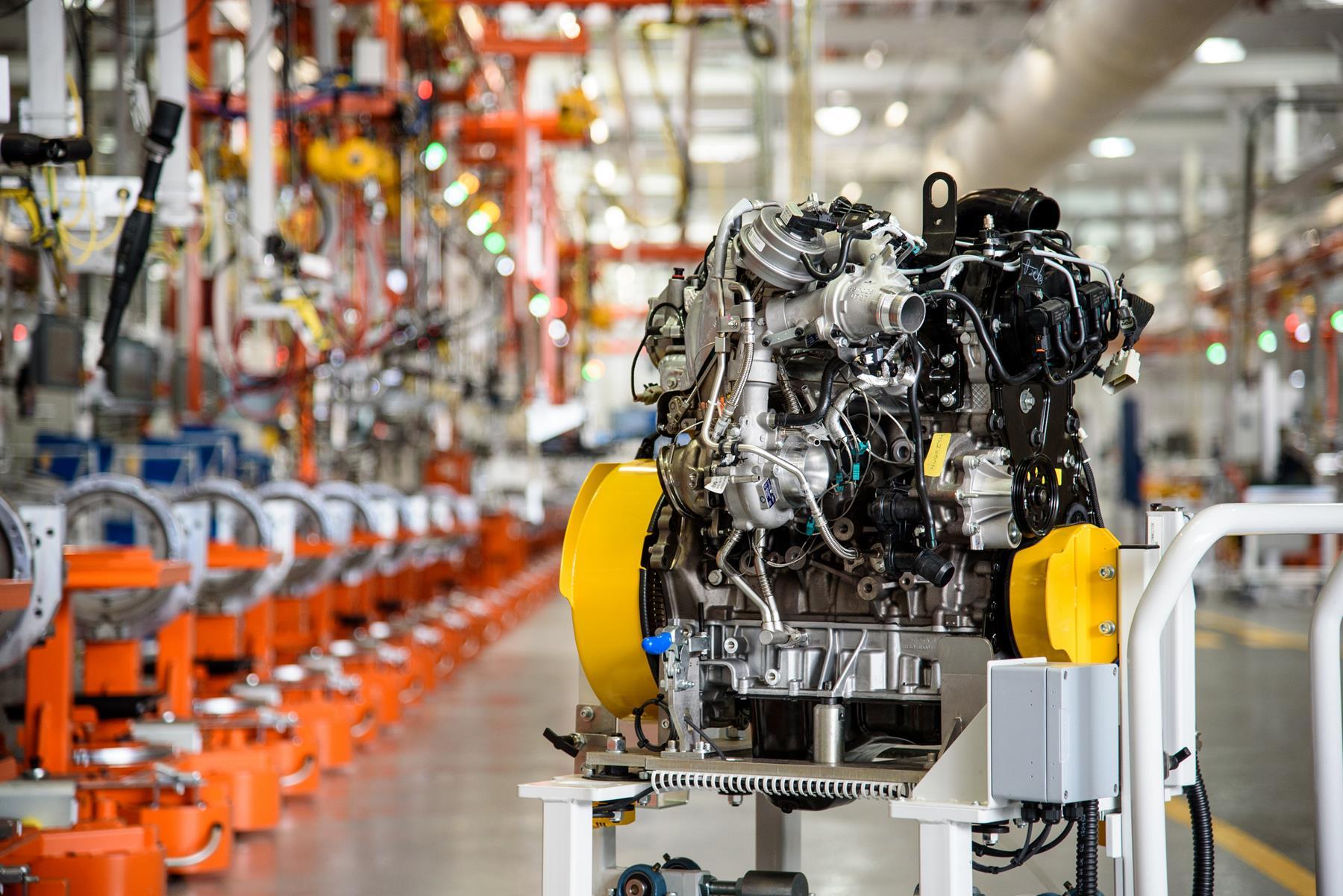
One of the engines produced at Ford’s Struandale engine plant in Gqeberha in the Eastern Cape.
“In parallel, for operational reasons, our Silverton Assembly Plant is realigning its production volume requirements for the Ranger in 2025. These adjustments are necessary to optimise efficiency and respond to current market dynamics.
“Regrettably, these operational realignments will result in a proposed separation of 474 positions across both the Struandale Engine Plant and the Silverton Assembly Plant. This was a difficult decision, and we understand the impact it will have on our employees and their families,” Ford says in a statement to Dealerfloor.
But back to the new kid on the Ford engine-block. The introduction of the 2.3-litre EcoBoost turbo petrol engine offers customers a compelling new powertrain, delivering a blend of strong performance and enhanced driving refinement, says Ford. The 2.3-litre EcoBoost engine, a proven performer in other Ford vehicles globally, is specifically tuned for the Ranger and Everest.
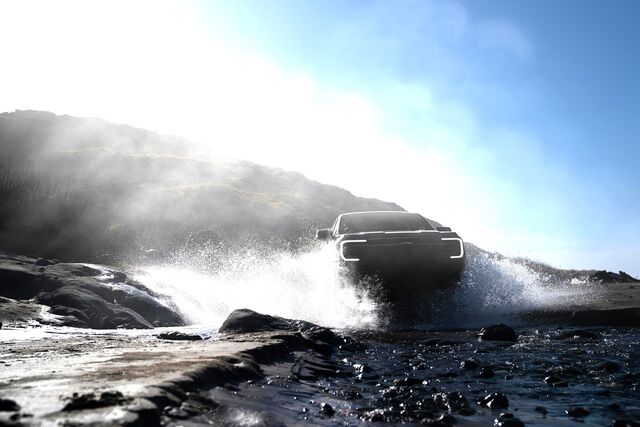
The new petrol engine will only be the second petrol engine from Ford for the Ranger line-up and the first in the Everest line-up. The only other petrol engine is the 3-litre V6 with 292kW and 583Nm used in the sport Ford Ranger Raptor.
The 2.3-litre EcoBoost turbo-charged petrol engine with direct-injection and inline 4 cylinders, delivers 222kW of power and 452Nm of torque connected to a 10-speed automatic gearbox. This is a mighty jump from the soon-to-be discontinued 2.0-litre twin diesel turbo version, which delivered 154kW and 500Nm.
The diesel model with the single turbo, which will soldier on – but will be imported as from next year – delivering 125kW and 405Nm of torque. This engine has been upgraded with a new timing chain for improved durability and performance. The 10-speed automatic transmission featuring an updated calibration will be offered for the first time on the XL and XLT models.
"Looking ahead, Ford is positioning itself for the future and meeting the demands of tomorrow’s customers," says Sunil Sewmohan: Director, Product Marketing Ford South Africa. "The 2.3-litre EcoBoost engine offers a distinct character, providing exhilarating acceleration, a more dynamic driving feel and a smooth experience that will appeal to those who prioritise responsiveness."
The revised line-up is expected in the first half of 2026.
Buyers with a budget but no shortlist are getting more help, and dealers have a few changes of their own to look forward to. In this article, sponsored by AutoTrader, we look at how AutoTrader is changing how buyers find cars and how dealers get them advertised.
JAC Motors South Africa has launched the T6 2.0L CTi 4x4 single cab bakkie, ten months after the T6 4x2 arrived in January. The T6 4x4 was first sold locally as a double cab in 2017, and it now enters the single cab segment. With this addition, the T-Series offers 4x4 derivatives across the T6, T8 and T9 ranges.
Cheap labour and state subsidies are the usual explanations for Chinese car prices. Research from think tanks and universities suggest the answer is far more complicated.
Cheap labour and state subsidies are the usual explanations for Chinese car prices. Research from think tanks and universities suggest the answer is far more complicated.
The first Volkswagen Tengo destined for an African customer rolled off the production line at Plant Kariega on 9 November 2026, making history in more ways than one.