

Chery names its first bakkie Grootman
Chery has named its first bakkie for South Africa Grootman, a name chosen by South Africans. The model is planned to make its local debut in the first quarter of 2027.
- Product News
- 2 October 2026
South Africa’s new-vehicle market started the new year on a positive but weak note, according to automotive business council, naamsa.
Mikel Mabasa, the CEO of naamsa, said load-shedding dented the growth in new sales in January 2023.
Mabasa said the destructive higher stages of load-shedding had undoubtedly amplified the negative impact on vehicle production and component manufacturing in South Africa.
“Load-shedding is the biggest inhibitor to drive the industry’s localisation ambitions, create sustainable jobs within the auto sector and to further attract investment opportunities into the country to grow the South African economy,” he said.
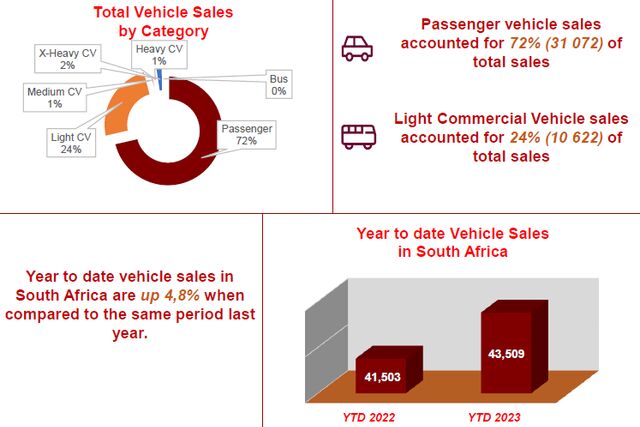
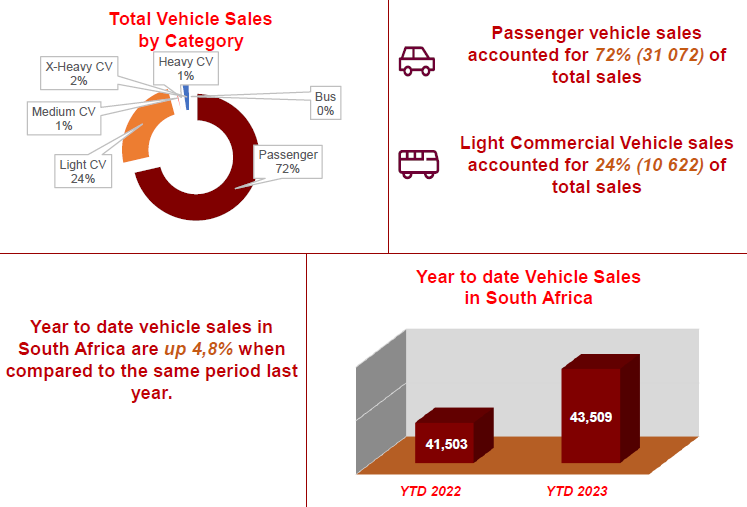
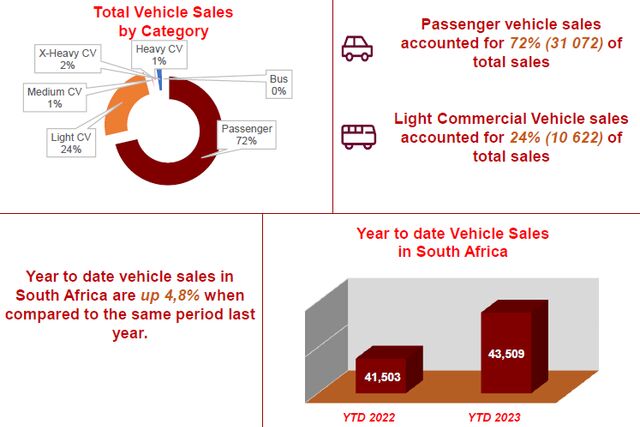
Figures released on Monday showed that aggregate domestic new-vehicle sales increased by 4.8% to 43 509 units in January 2023 from the 41 503 vehicles sold in the corresponding month in 2022.
Out of the total reported industry sales of 43 509 vehicles, dealer sales represented an estimated 83.6% or 36 353 units, an estimated 12.1% sales to the vehicle rental industry, 2.2% sales to government and 2.1% sales to industry corporate fleets.
Sales of new passenger cars improved by 2.9% to 31 072 units from the 30 199 new cars sold in January 2022.
The car rental industry supported the new passenger car market during the month and accounted for 16.2% of sales in January 2023.
Sales of domestic new light commercial vehicles, bakkies and mini-buses increased year-on-year by 10.4% to 10 622 units in January 2023, medium commercial vehicles by 2.9% to 461 units and heavy truck and bus sales by 9.9% to 1 354 units.
Mabasa said the weak performance of the new-vehicle market during the first month of the year is in line with expectations of a depressed economy together with ongoing structural problems and cost of living increases.
He said the same challenges that confronted the economy and the automotive industry in 2022, including persistent load-shedding, high inflation, rising interest rates and currency depreciation, have been carried over into 2023.
“During the month, the South African Reserve Bank raised interest rates for the eighth consecutive time since November 2021 and adjusted the country’s GDP growth rate for 2023 down to only 0.3% owing to extensive load-shedding and other logistical constraints.
“The Bank estimated that load-shedding would reduce growth in 2023 by as much as 2 percentage points.
“A close correlation exists between new-vehicle sales and the country’s GDP growth rate.
“It is expected that unpredictability in the new-vehicle market will prevail but that sales would exceed the pre-COVID-19 level in 2023,” he said.
Wesbank Head of Marketing and Communications, Lebogang Gaoaketse, said although interest rates were currently above pre-pandemic levels and inflation remained high, the new-vehicle market continued to recover.
Gaoaketse said the pent-up demand for new vehicles during the majority of last year would help sales to continue to grow during 2023.
However, Gaoaketse said the new year kicked off with the eighth consecutive interest rate hike and yet another increase in fuel prices while load-shedding worsened.
“All these factors continue to place pressure, not only on the economy as a whole, but practically on the households and livelihoods of consumers,” he said.
View the full report here: AVAF Infographic naamsa January 2023
Chery has named its first bakkie for South Africa Grootman, a name chosen by South Africans. The model is planned to make its local debut in the first quarter of 2027.
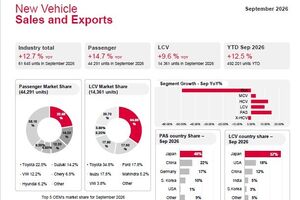
South Africa’s new vehicle market recorded aggregate domestic sales of 61 645 units in September 2026, an increase of 12.7% compared with the 54 706 units sold during September 2025.
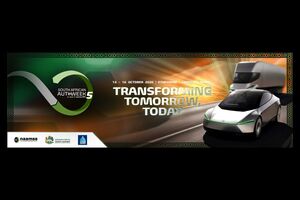
SA Auto Week 2026 is scheduled to take place in eThekwini, KwaZulu-Natal, from 13 to 16 October, with the event marking five years of SA Auto Week.
 Advertisement
 Advertisement
I have bad reflexes. I was once run over by a car being pushed by two guys
Woody Allen
South Africa’s new vehicle market recorded aggregate domestic sales of 61 645 units in September 2026, an increase of 12.7% compared with the 54 706 units sold during September 2025.
SA Auto Week 2026 is scheduled to take place in eThekwini, KwaZulu-Natal, from 13 to 16 October, with the event marking five years of SA Auto Week.
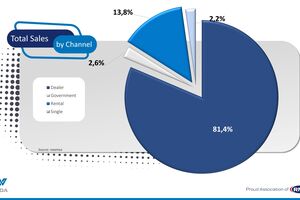
South Africa’s domestic new-vehicle market strengthened in September, recording 61 645 sales, its highest monthly total of 2026. Sales increased by 3 747 vehicles, or 6.5%, from August’s originally reported total and were 12.7% higher than in September 2025.