
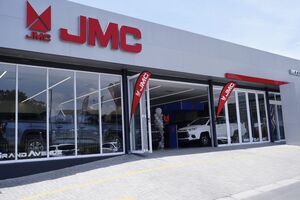
JMC Woodmead celebrates first month of business
Bidvest McCarthy JMC Woodmead celebrated its first month of business in its new flagship showroom in Woodmead this week.
- Dealer News
- 18 November 2026
The confidence of chief executives of automotive companies about the outlook for the new vehicle market over the next six months has improved.
An equal 37.5% of CEOs believe domestic new vehicle sales will increase and decline in the next six months, according to the latest confidence index of automotive business council naamsa for third quarter 2023.
The remaining 25% of CEOs believe sales will remain unchanged in this period.
In the second quarter of this year, 54% of chief executives believed domestic new vehicle sales would decline in the next six months, 31% believed new vehicles sales would increase and 15% believed sales would remain the same.
However, at the end of third quarter 2023 only 12.5% of CEOs believed that general new vehicle business conditions would improve in the next six months.
This is a deterioration from the 15% of CEOs who held this view at the end of the second quarter.
However, there has been some moderation – to 62.5% from 70% – in the percentage of CEOs who believed at the end of third quarter 2023 that general new vehicle business conditions would deteriorate in the next six months compared to the percentage of CEOs who held this view in the second quarter.
A quarter of CEOs believe that general new business conditions will remain unchanged in the next six months.
Naamsa CEO, Mikel Mabasa, said the views of the naamsa CEOs generally reflected a stable to negative outlook for all of the industry’s key performance indicators, with a negative outlook for general business conditions over the next six months going into 2024.
Mabasa said although the SA Reserve Bank has increased its forecast for South Africa’s GDP growth from 0.4% to 0.7% for 2023, the GDP growth forecast for 2024 remains muted and unchanged at 1%.
He said energy and logistical constraints remained binding on the growth outlook, limiting economic activity and increasing costs while the risks to the inflation outlook were still assessed to the upside.
In addition, the ongoing absence of a new energy vehicle policy framework to support the inevitable transition to new energy vehicles (NEVs) presents major risks to business opportunities, he said.
Commenting specifically on the confidence of CEOs in third quarter 2023 compared to the corresponding quarter in 2022, Mabasa said the sentiment expressed by the naamsa CEOs generally reflected the persistent economic strain on businesses and consumers, despite the easing of inflation and the pause in interest rate increases by the SA Reserve Bank during the quarter.
“The new vehicle market continues to grapple with affordability as subdued demand for high-priced luxury items, such as vehicles, correlates with a stagnating economy, further depressed by elevated cost of living increases.
“Although the impact of load-shedding abated somewhat during the quarter, some unplanned outages along with ongoing logistics inefficiencies at ports and on rail continued to disrupt business operations,” he said.
Bidvest McCarthy JMC Woodmead celebrated its first month of business in its new flagship showroom in Woodmead this week.

Combined Motor Holdings (CMH) has appointed Charles Webber as the new Group CEO.
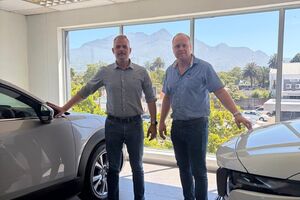
Mazda Southern Africa has welcomed Group1 Mazda Southern Cape to its dealer network, strengthening the brand’s presence in the Southern Cape and creating a new home for Mazda customers in George and the surrounding region.
 Advertisement
 Advertisement
Cars are the ultimate symbol of freedom, independence and individualism. They offer the freedom to ‘go anywhere,’ whenever it suits and with whom one chooses.
Sarah Redshaw
Combined Motor Holdings (CMH) has appointed Charles Webber as the new Group CEO.
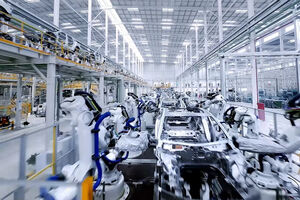
Cheap labour and state subsidies are the usual explanations for Chinese car prices. Research from think tanks and universities suggest the answer is far more complicated.
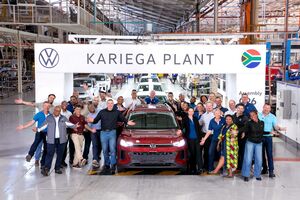
The first Volkswagen Tengo destined for an African customer rolled off the production line at Plant Kariega on 9 November 2026, making history in more ways than one.