

Chery names its first bakkie Grootman
Chery has named its first bakkie for South Africa Grootman, a name chosen by South Africans. The model is planned to make its local debut in the first quarter of 2027.
- Product News
- 2 October 2026
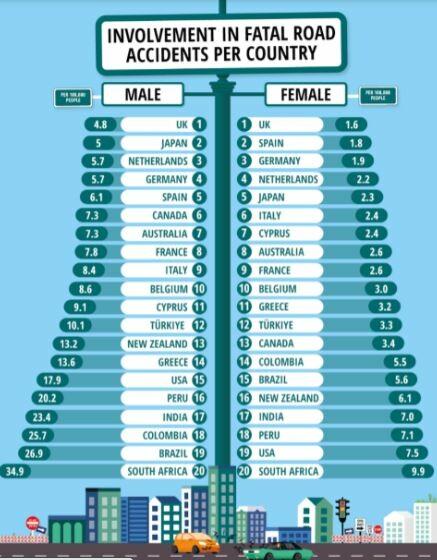
Whether the worst drivers are male or female is an age-old debate that is unlikely to ever abate. The bad news for South Africans is that according to recent research conducted by Compare the Market in Australia, both South African males and females are the worst drivers in a comparative analysis of 20 countries.

An article published on the research says South Africans cause the highest number of fatal crashes, regardless of gender. “It goes on to say that males are responsible for 34.9% of fatal crashes while females are responsible for 9.9%. When each of these is compared to the 19 other countries in the study, South Africa is placed the highest for fatal crashes across both genders.
“The study additionally states that the fatality rate is approximately 44.8 fatalities per 100 000 citizens, which is worse than other developing nations like Colombia, India and Brazil. Furthermore, the article says this is particularly concerning when one considers the potholes, mud pits and flooding in countries like Brazil,” says Eugene Herbert from MasterDrive.
While the state of South African road safety is undeniably dismal, it is important to assess the study critically. “It is inaccurate, at best, to say South Africa has the worst drivers in a study that only includes 20 out of 195 of the countries in the world. While the article never actually says South Africa has the worst drivers in the world, its lack of specificity leaves it open to interpretation.
“Furthermore, to assume that South Africa is not affected by potholes or flooding is erroneous. Lastly, out of 20 countries in the study, only 4% are developing nations. Thus, the study appears to lack a representative distribution of developed and developing nations. The findings can be represented in a way that attracts readership and conversation, but which may not necessarily be accurate.”
With these factors in mind, what can be concluded from the results? “An average of 34.9 fatalities per 100 000 for males and 9.9 fatalities per 100 000 for females, is still unacceptably high. The last official research conducted in 2010 by the WHO put the total number at 25.9. Thus, there may be a very high rise in fatalities despite reported decreases over holiday periods and during COVID-19.
“Does it prove males are worse drivers than female drivers? No, not definitively. To measure this, a study needs to include the concentration of male drivers versus female drivers. MasterDrive has always advised against comparing one group against another. The danger lies in creating a mistaken belief that people can relax their guard or take more risks because they are ‘better drivers’ than their gender counterparts.”
All drivers should focus on their driving alone. “Make a concerted effort to improve your driving without hampering your intention to be the best driver possible because of a study that may not have considered all variables and which presents information that is not useful in improving road safety overall,” says Eugene.

Chery has named its first bakkie for South Africa Grootman, a name chosen by South Africans. The model is planned to make its local debut in the first quarter of 2027.
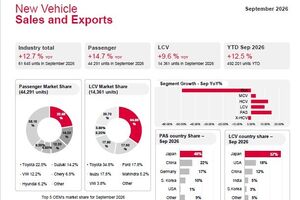
South Africa’s new vehicle market recorded aggregate domestic sales of 61 645 units in September 2026, an increase of 12.7% compared with the 54 706 units sold during September 2025.
SA Auto Week 2026 is scheduled to take place in eThekwini, KwaZulu-Natal, from 13 to 16 October, with the event marking five years of SA Auto Week.
 Advertisement
 Advertisement
Have you ever noticed that anybody driving slower than you is an idiot, and anyone going faster than you is a maniac?
George Carlin
South Africa’s new vehicle market recorded aggregate domestic sales of 61 645 units in September 2026, an increase of 12.7% compared with the 54 706 units sold during September 2025.
SA Auto Week 2026 is scheduled to take place in eThekwini, KwaZulu-Natal, from 13 to 16 October, with the event marking five years of SA Auto Week.
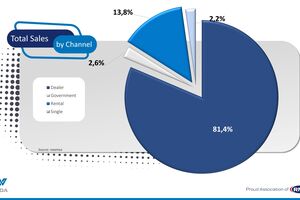
South Africa’s domestic new-vehicle market strengthened in September, recording 61 645 sales, its highest monthly total of 2026. Sales increased by 3 747 vehicles, or 6.5%, from August’s originally reported total and were 12.7% higher than in September 2025.