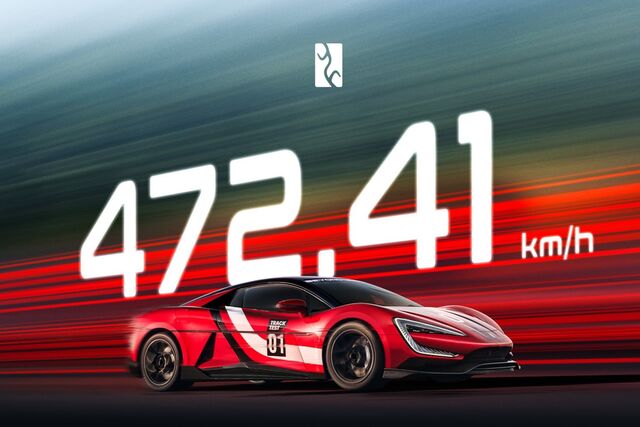
In a groundbreaking achievement for electric mobility, Yangwang, BYD's premium automotive division, has shattered the global electric vehicle speed record at Germany's renowned Automotive Testing Papenburg (ATP) facility.
Share with friends
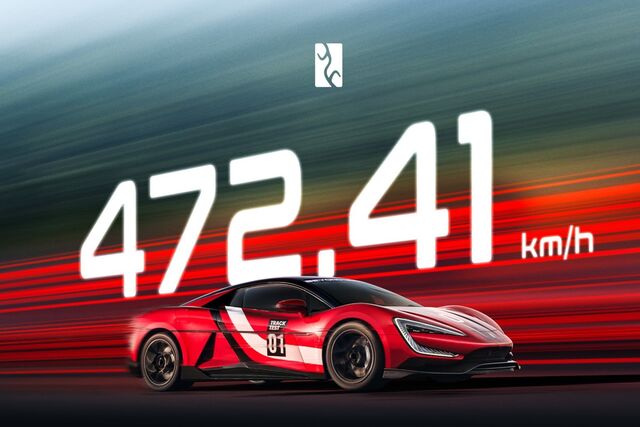
The Yangswang U9 Track Edition supercar reached an unprecedented 472.41km/h, establishing itself as the world's fastest electric vehicle and redefining what's possible in sustainable high-performance automotive engineering.
The U9 Track Edition's remarkable achievement stems from its sophisticated technical foundation built upon Yangwang proven e4 Platform and DiSus-X architecture, which already powers the production U9 model available in China. However, this track-focused variant incorporates several revolutionary enhancements, most notably the world's first mass-produced 1200V ultra-high-voltage vehicle platform, complemented by an advanced thermal management system specifically optimised for extreme operating conditions.
At the heart of this performance marvel lies the e4 Platform's quad-motor configuration, featuring four 30 000r/min high-performance electric motors, a world-first in automotive engineering. Each motor delivers a staggering 555kW of peak power, contributing to a combined system output exceeding 2 237kW. This translates to an extraordinary power-to-weight ratio of 908kW per tonne, placing the U9 Track Edition among the most powerful vehicles ever created.
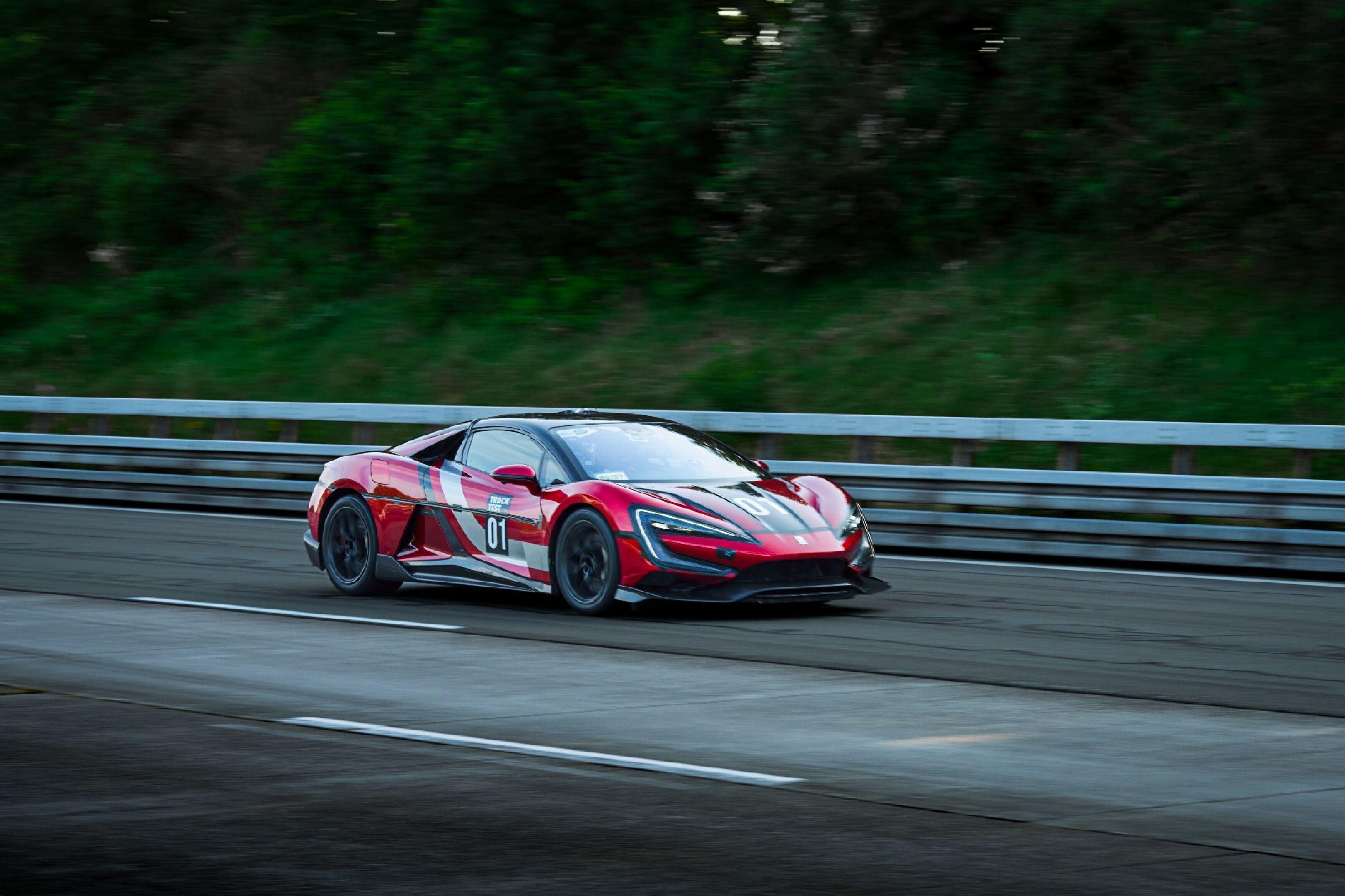
The Yangswang U9 Track Edition in action on the track.
Breaking speed records requires more than raw power; it demands exceptional stability and control. The e4 Platform's intelligent torque-vectoring system continuously monitors road conditions and adjusts each wheel's torque output over 100 times per second. This ultra-high-frequency adjustment ensures optimal traction and prevents wheel slip, even at record-breaking velocities.
Working in perfect harmony with the powertrain, the DiSus-X Intelligent Body Control System provides rapid, independent suspension adjustments at each corner of the vehicle. This advanced system actively manages body posture during aggressive acceleration, cornering and when encountering uneven surfaces, effectively suppressing pitch and roll while optimising tyre contact patches for maximum grip.
Yangwang’s commitment to pushing boundaries extended to developing specialised components for the record attempt. In collaboration with Giti Tire, the company created track-focused semi-slick tires featuring optimised compound materials and bespoke tread designs.
These high-performance tyres incorporate innovative knurling treatments at the wheel-rim interface, combined with high-viscosity lubricants, to minimise slippage during extreme acceleration and braking while reducing torque loss and tyre wear.
The U9 Track Edition retains the aerodynamic excellence of the production model while adding an enhanced carbon-fibre front splitter, already in mass production, which proved its effectiveness under ultra-high-speed conditions during the record run.
German professional driver, Marc Basseng, who previously held the EV speed record and piloted the U9 Track Edition to its historic achievement, reflected on the milestone: "Last year, I thought I'd peaked. I never expected to break my own record so soon, but here we are, at the same track, with new technologies that have made it possible."
This record-setting performance represents more than just a number; it symbolises the evolution of sustainable mobility. By combining BYD's commitment to innovation with Yangwang’s pursuit of automotive excellence, the U9 Track Edition demonstrates that electric vehicles can deliver uncompromising performance without sacrificing environmental responsibility. The achievement marks a pivotal moment in automotive history, proving that the future of high-performance motoring is not only secure, but its progress is quicker than ever before.
A dispute over the payload ratings of Jetour’s T1 and T2 SUVs has developed further following weighbridge testing in Gauteng, with the Automobile Association (AA) questioning some of the results and Jetour South Africa maintaining that its revised figures have been independently verified.
Chinese vehicle manufacturers continued to record significantly stronger growth than established OEM brands in South Africa during the second quarter of 2026, according to TransUnion's Q2 2026 Mobility Report.
Cars are the ultimate symbol of freedom, independence and individualism. They offer the freedom to ‘go anywhere,’ whenever it suits and with whom one chooses.
South Africa's new energy vehicle market is becoming increasingly diverse, with plug in hybrid electric vehicles (PHEVs) and fully electric vehicles gaining ground while traditional hybrids remain the largest category.
As South Africans celebrate their rich heritage, it is also worth reflecting on a lesser-known chapter of the country's history: its long connection with electric vehicles (EVs).