Well, it is definitely not a bird, plane OR Superman!
Just as everyone was getting mildly comfortable with all things electric-vehicle related, prepare for your minds to be bent in a completely different direction.
Share with friends
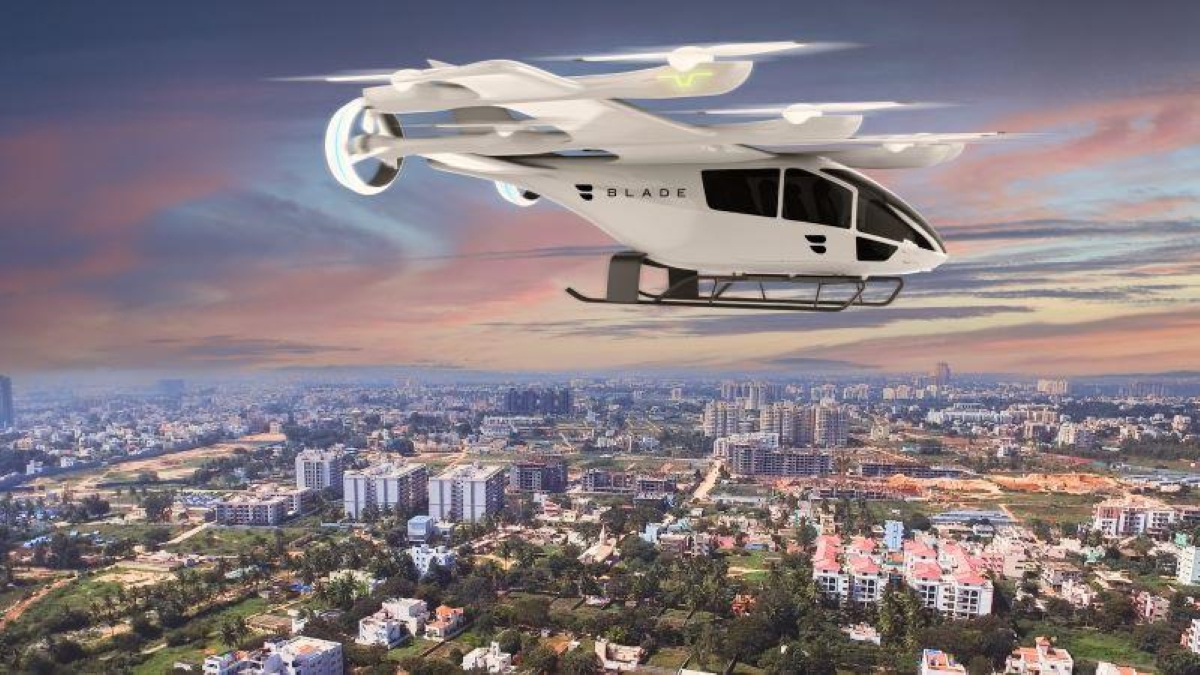
Reuters reports that electric aircraft maker Eve and Blade Air Mobility are expanding their partnership to integrate Eve's upcoming flying car into Blade's European route network, starting with France.
The deal follows similar agreements between the firms, which are currently participating in the Paris Airshow, to use Eve's electric vertical take-off and landing vehicles (eVTOLs) in India and the United States.
Eve is controlled by Brazilian plane maker, Embraer, and expects to start commercial operations of its vehicle in 2026.
Taking an EV air taxi…
Eve and Blade said in a statement that under their new memorandum of understanding, Blade would focus on developing practical applications for air mobility, including identifying future routes in France and other European countries.
They did not say if the deal would involve new eVTOL purchases by Blade, whose current European operations include flying conventional helicopters between Nice and Monaco.
Eve and Blade last year agreed to deploy up to 200 electric aircraft in India, after also signing a letter of intent for operations in the US, where Eve expects to provide up to 60 vehicles a year.
"Extending our partnership with Eve underscores Blade's commitment to leading the transition from conventional to electric vertical aircraft," Blade Chief Executive Officer, Rob Wiesenthal, says.
Eve holds a backlog of nearly 2 800 orders before starting production, with development backed by investors such as United Airlines and Rolls-Royce.
The firm recently announced the first equipment suppliers for its eVTOLs and expects to start building its first full-scale prototype in the second half. Additional testing is planned for 2024.
Eve CEO, André Stein, said he expected the extended partnership with Blade to allow the companies to combine expertise and resources to make travel more accessible and drive environmental improvements.
A dispute over the payload ratings of Jetour’s T1 and T2 SUVs has developed further following weighbridge testing in Gauteng, with the Automobile Association (AA) questioning some of the results and Jetour South Africa maintaining that its revised figures have been independently verified.
Chinese vehicle manufacturers continued to record significantly stronger growth than established OEM brands in South Africa during the second quarter of 2026, according to TransUnion's Q2 2026 Mobility Report.
Cars are the ultimate symbol of freedom, independence and individualism. They offer the freedom to ‘go anywhere,’ whenever it suits and with whom one chooses.
South Africa's new energy vehicle market is becoming increasingly diverse, with plug in hybrid electric vehicles (PHEVs) and fully electric vehicles gaining ground while traditional hybrids remain the largest category.
As South Africans celebrate their rich heritage, it is also worth reflecting on a lesser-known chapter of the country's history: its long connection with electric vehicles (EVs).