The Electric Vehicle (EV) White Paper released by the Department of Trade, Industry and Competition was welcomed by many role players in the industry.
Share with friends
Among them is Zero Carbon Charge, the country’s first national network of renewable energy charging stations.
The release of the White Paper signals that government is serious about South Africa’s transition to EVs and offers some much-needed policy certainty on the way forward, says Zero Carbon Charge in a statement.
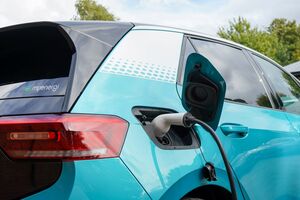
The White Paper also deals with the need to ramp up South Africa’s charging infrastructure, while recognising the problem of ‘on-grid’, mainly coal-powered, EV-charging stations.
“The continued dominance of coal in South Africa’s energy mix, means that replacing an ICE vehicle with an EV version has a modest reduction of emissions. For example, a full battery electric vehicle will eliminate tailpipe emissions but the reliance on charging the vehicle with high-emission electricity still means that driving the car is associated with emissions,” according to the paper.
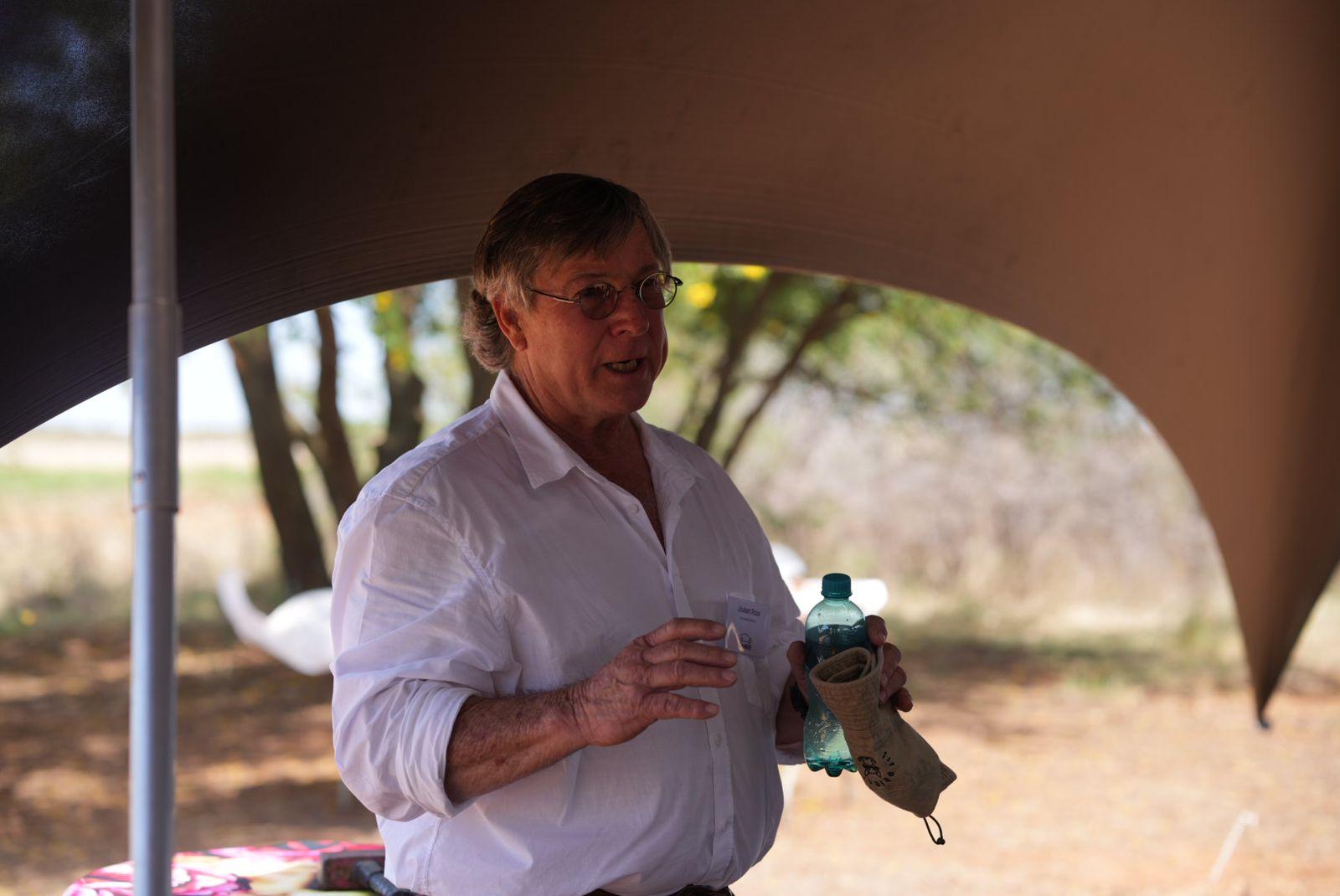
Joubert Roux, Co-Director and Founder of Zero Carbon Charge.
Elsewhere, the White Paper says: “The transition to EVs will only truly be low-carbon once charging infrastructure has shifted materially to renewable energy sources. The implication is that the use of renewable energy based systems to power charging stations is important for allaying prospective consumers’ concerns related to grid power supply and availing a truly low carbon transition.”
However, despite recognising the need for renewable energy charging stations, a great deal of the White Paper is devoted to how the existing grid, which relies mainly on coal, can be capacitated to cater for EVs.
In his press conference, Minister Patel indicated that the priority was for the existing “grid to become greener”.
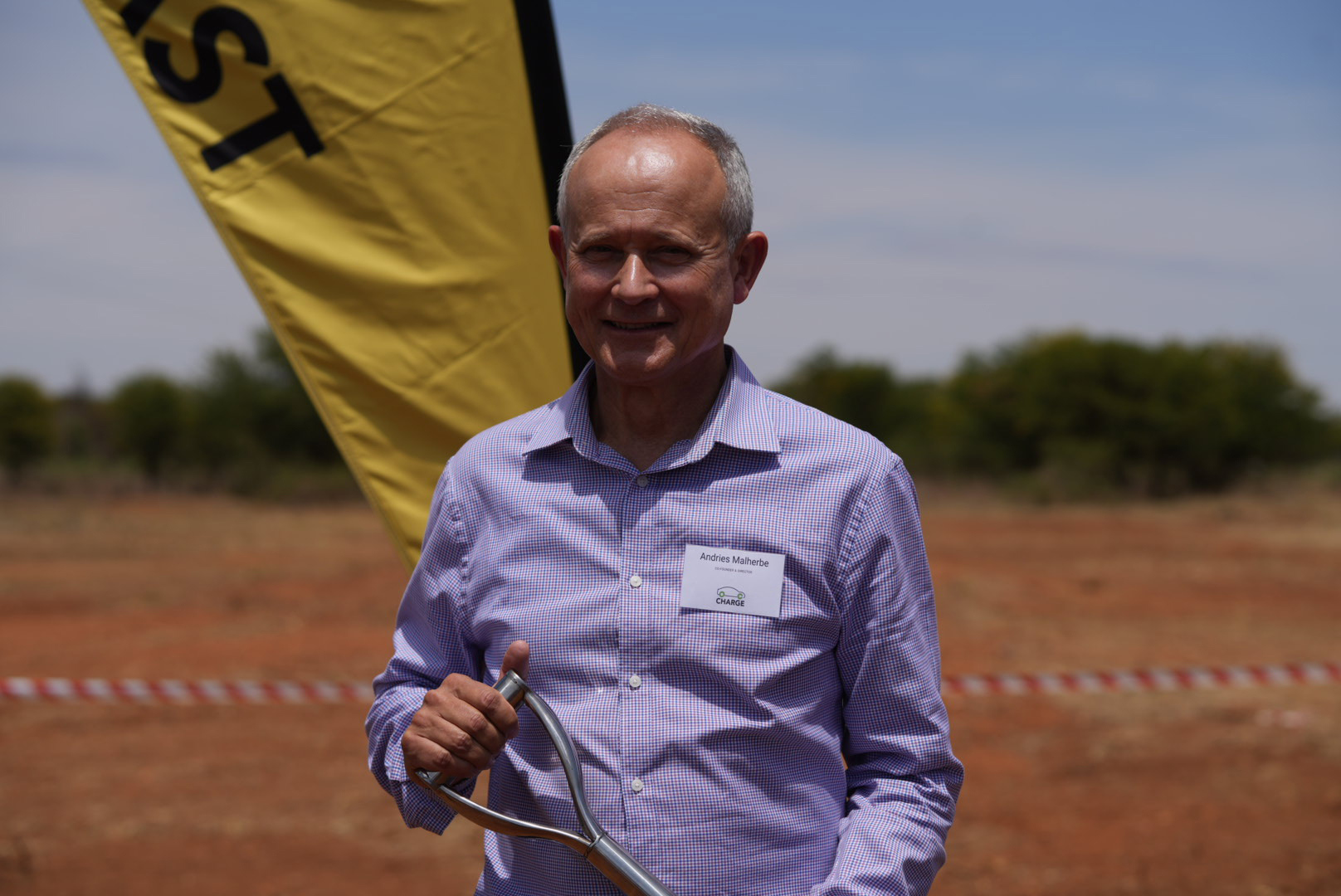
Andries Malherbe, Co-Director and Founder of Zero Carbon Charge.
“We believe that the White Paper’s focus on capacitating and greening the existing grid will unnecessarily delay the transition to EVs. Instead, the focus should be on immediately developing off-grid EV-charging stations based on renewable sources, such as the solar-powered facilities that we are starting to roll out across the country,” says Joubert Roux, Co-Director and Founder of Zero Carbon Charge.
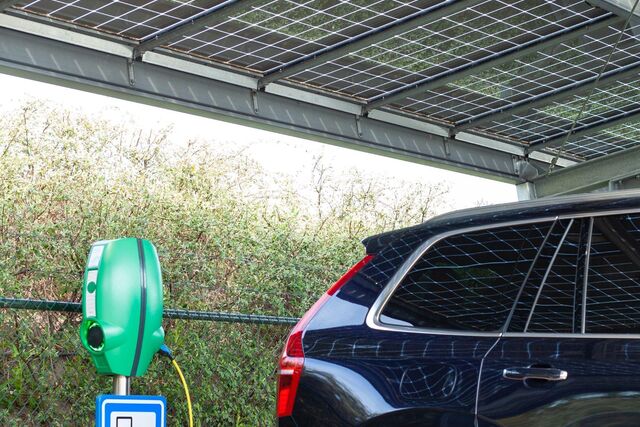
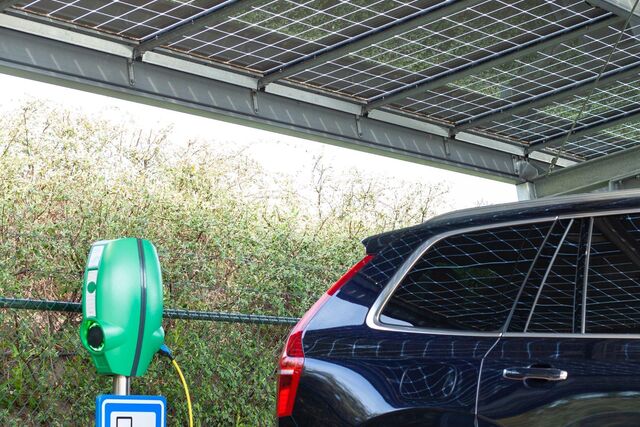
“Zero Carbon Charge is already building, at scale, 120 charging facilities based on 100% renewable energy. Each Zero Carbon Charge charging station, spaced approximately 150 km apart, will generate electricity on-site using solar PV. Energy is stored in lithium iron phosphate batteries, with generators fuelled by hydro-treated vegetable oil as a back-up power source.
“The charging stations are completely off-grid, which means that they are unaffected by load-shedding. In any event, no grid – anywhere in the world – is equipped to handle the mass transition from internal combustion engines to EVs.”
In his press conference yesterday, Minister Patel indicated that details on the fiscal aspects will be announced by the Minister of Finance in his Budget Speech in February 2024 and that further elements of the White Paper will be released in the coming months.
“Zero Carbon Charge is ready to engage Minister Patel and his team on how to reduce reliance on the grid and in so doing move to cleaner EV-energy sources.
“We will be seeking a meeting with Minister Patel to demonstrate how the problem of high carbon, on-grid, EV charging can be avoided. More specifically, we would like to update him on our plans to roll out a 100% renewable energy, off-grid, charging-station network, starting with the site we began constructing in Wolmaransstad last week,” says Andries Malherbe, Co-Director and Founder of Zero Carbon Charge.
A dispute over the payload ratings of Jetour’s T1 and T2 SUVs has developed further following weighbridge testing in Gauteng, with the Automobile Association (AA) questioning some of the results and Jetour South Africa maintaining that its revised figures have been independently verified.
Chinese vehicle manufacturers continued to record significantly stronger growth than established OEM brands in South Africa during the second quarter of 2026, according to TransUnion's Q2 2026 Mobility Report.
South Africa's new energy vehicle market is becoming increasingly diverse, with plug in hybrid electric vehicles (PHEVs) and fully electric vehicles gaining ground while traditional hybrids remain the largest category.
As South Africans celebrate their rich heritage, it is also worth reflecting on a lesser-known chapter of the country's history: its long connection with electric vehicles (EVs).