Electric tractors for farming in Rwanda on the cards
Volkswagen has signed a Memorandum of Understanding (MoU) with the Government of Rwanda to establish a modern farm with electric tractors.
Share with friends
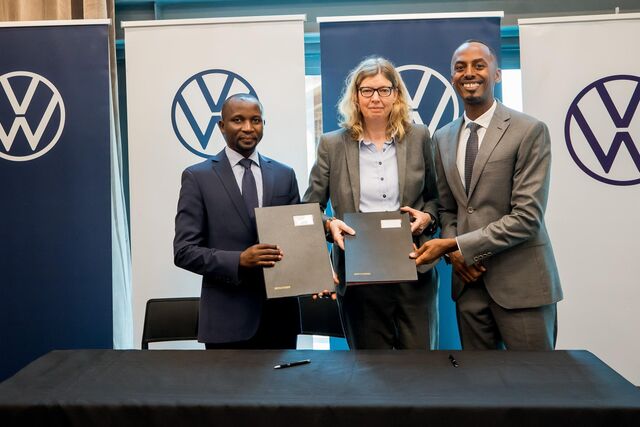
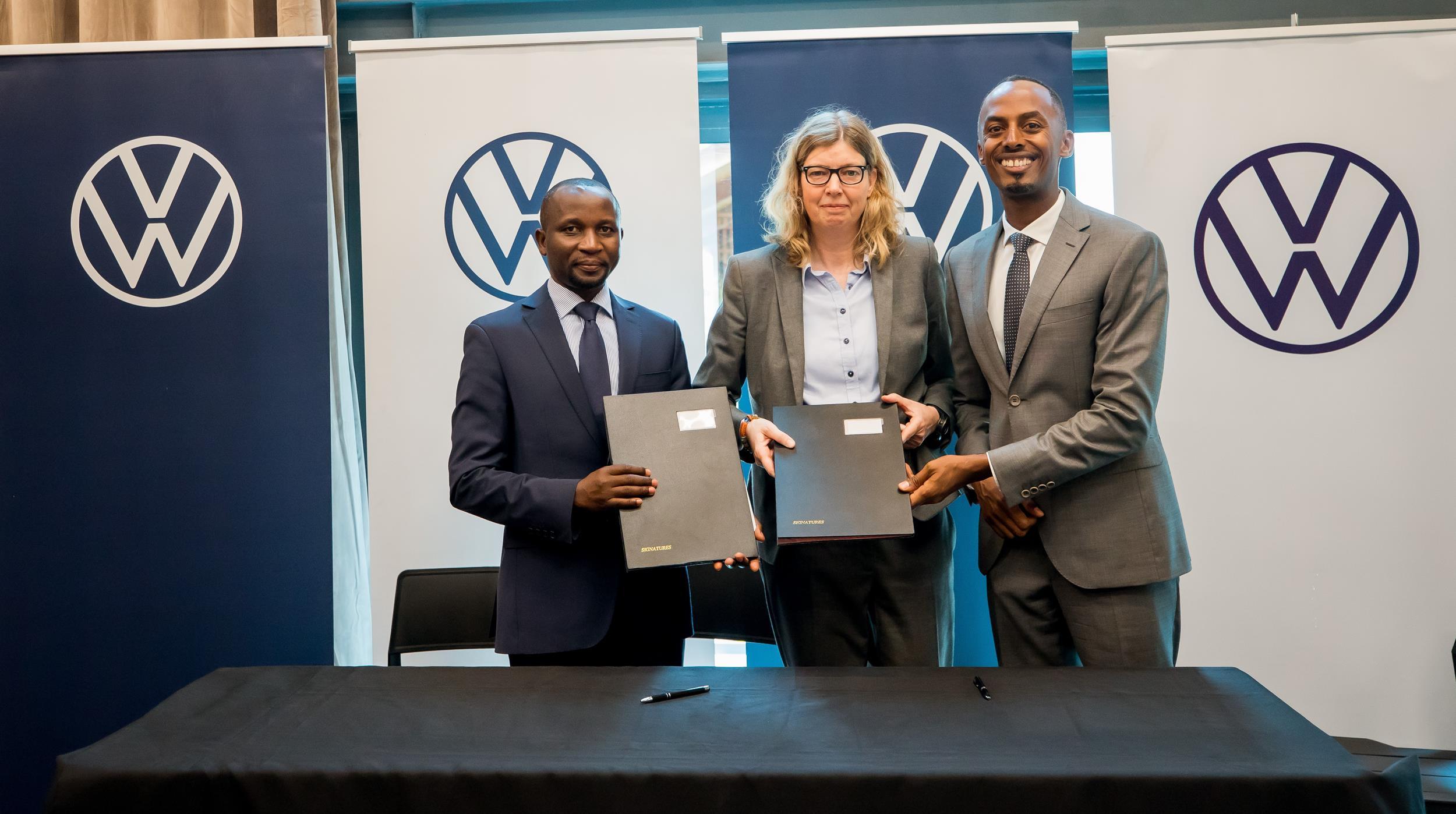
The MoU was signed by Dr Ildephonse Musafiri, the Minister of Agriculture and Animal Resources, Serge Kamuhinda, CEO of Volkswagen Mobility Solutions Rwanda, and Martina Biene, Chairperson and Managing Director of Volkswagen South Africa, in the presence of Imelda Labbé, member of the Brand Board of Management of Volkswagen for Marketing, Sales and After-sales.
As part of the MoU, the Government of Rwanda has agreed to provide land in Gashora (Bugesera District) for the project, as well as to assist with permitting and licensing requirements of the project.
The objective of the GenFarm Project in Rwanda is to make a positive, sustainable socio-economic and environmental impact on the community by creating a carbon neutral business ecosystem.
Dr Ildephonse Musafiri, Minister of Agriculture and Animal Resources, Martina Biene, Chairperson and Managing Director of Volkswagen Group South, and Serge Kamuhinda, CEO of Volkswagen Mobility Solutions Rwanda.
The GenFarm Project is a holistic ecosystem of e-powered mechanised farming service for rural areas in Africa that is reliable, sustainable and environmentally friendly. The excess energy used to charge the electric tractors will provide power for post-harvest handling and storage.
The pilot project in Rwanda is steered by Volkswagen Group Innovation in partnership with Volkswagen Mobility Solutions Rwanda.
“The signing of the MoU with the Government of Rwanda marks yet another milestone for Volkswagen’s sustainable mobility lighthouse projects in Rwanda. Our long-term plan is to build up demand for electric batteries in Africa by introducing locally relevant business solutions.
“The future of mobility in Africa will also be determined by the storage and distribution of green energy. With the GenFarm, we hope to address the mobility needs of customers with high transformational impact on the African economy,” says Martina.
A dispute over the payload ratings of Jetour’s T1 and T2 SUVs has developed further following weighbridge testing in Gauteng, with the Automobile Association (AA) questioning some of the results and Jetour South Africa maintaining that its revised figures have been independently verified.
Chinese vehicle manufacturers continued to record significantly stronger growth than established OEM brands in South Africa during the second quarter of 2026, according to TransUnion's Q2 2026 Mobility Report.
South Africa's new energy vehicle market is becoming increasingly diverse, with plug in hybrid electric vehicles (PHEVs) and fully electric vehicles gaining ground while traditional hybrids remain the largest category.
As South Africans celebrate their rich heritage, it is also worth reflecting on a lesser-known chapter of the country's history: its long connection with electric vehicles (EVs).