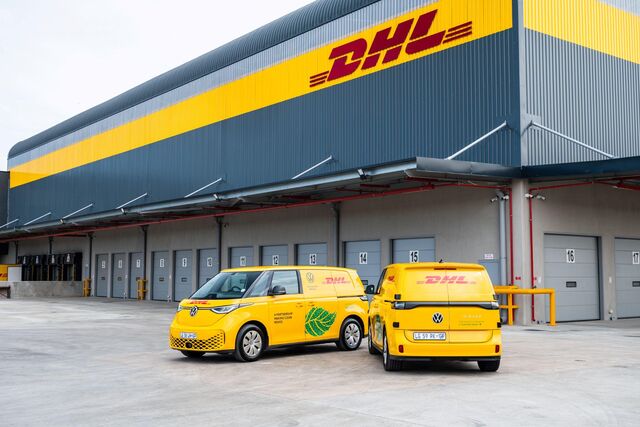
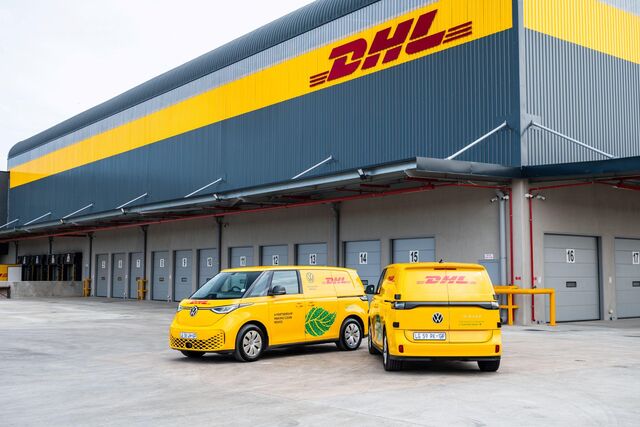
Volkswagen Commercial Vehicles has partnered with DHL Express for the pilot test of the ID.Buzz Cargo fleet in South Africa.
Share with friends
Four ID.Buzz Cargo units will be placed at the DHL Express Service Centres in Johannesburg, Cape Town and Durban for six months. The units will be utilised for specialised last-mile delivery service, which forms part of DHL’s local pilot test of its global zero-emissions logistics target.
The introduction of the ID.Buzz Cargo test fleet is an effort towards the realisation of Volkswagen Group South Africa’s electric-vehicles strategy for the Volkswagen brand in South Africa. The test fleet will assist Volkswagen in building awareness of its electric vehicles in South Africa and to obtain learnings that are key for the brand’s electric-vehicles strategy.
Thomas Milz, Director of Sales and Marketing at VWSA, says: “Our partnership with DHL Express on the ID.Buzz Cargo test fleet marks the beginning of Volkswagen’s long-term plan to gradually introduce its electric vehicles in the local market.
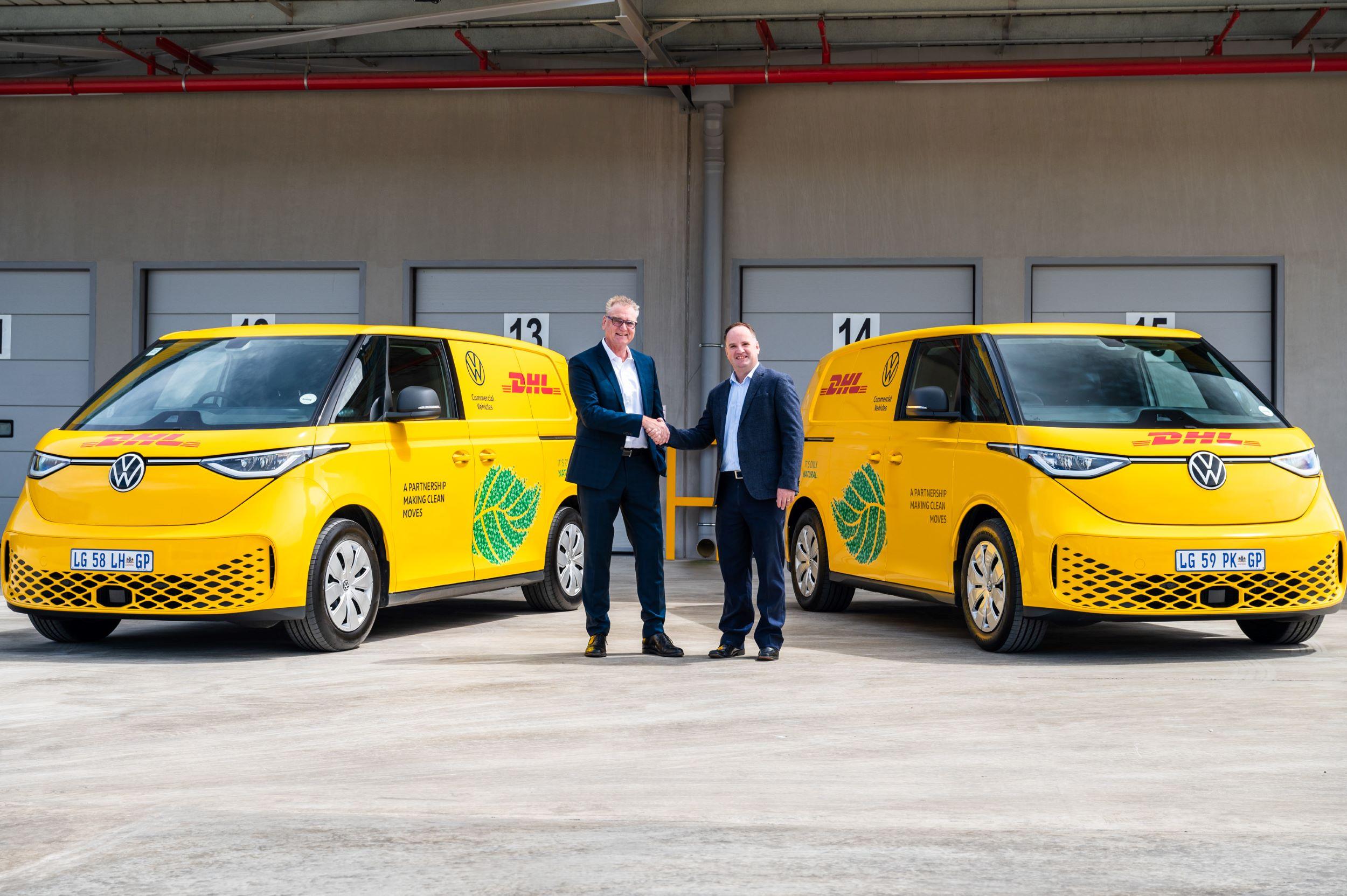
Thomas Milz, Director of Sales and Marketing at VWSA, and Jed Michaletos, MD, DHL Express South Africa, with two of DHL’s ID. Buzz vehicles.
“At the end of the pilot test, we hope to have gathered sufficient information and insights on the readiness of the local market for the introduction of a commercial electric vehicle such as the ID.Buzz Cargo. We are very excited to partner with DHL, which shares a similar commitment of zero emissions by 2050 in accordance with the Paris Climate Agreement.”
“As the world’s leading logistics company, we have a responsibility to set an example in our industry and be a sustainability leader. DHL Express has committed to achieve zero emissions by 2050 through a number of initiatives, one of which is ensuring that we have at least 60% electric vehicles for last-mile deliveries by 2030. We are excited to partner with VWSA to pilot their ID. Buzz in our South African operations,” says Jed Michaletos, MD, DHL Express South Africa, says.
Cheap labour and state subsidies are the usual explanations for Chinese car prices. Research from think tanks and universities suggest the answer is far more complicated.
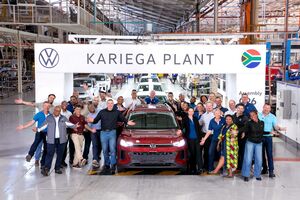
The first Volkswagen Tengo destined for an African customer rolled off the production line at Plant Kariega on 9 November 2026, making history in more ways than one.
Cars are the ultimate symbol of freedom, independence and individualism. They offer the freedom to ‘go anywhere,’ whenever it suits and with whom one chooses.
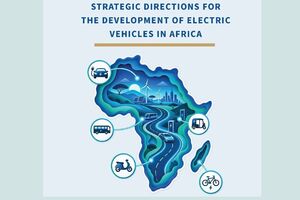
Energy security, electrification, grid infrastructure and sustainable transport take centre stage at COP31 in Antalya, Türkiye, as the climate conference devotes a full day to energy and transport. Africa enters that conversation with a plan of its own: the African Union’s (AU) Continental Framework on Electric Mobility (eMobility).
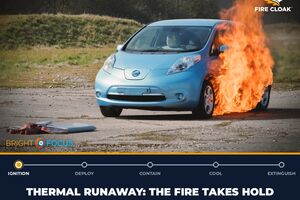
As electric and plug-in hybrid vehicles become more common in South Africa, dealerships and workshops face new safety challenges. In this article, sponsored by Bright Focus, we look at complete scenario surrounding the damaged high-voltage battery packs can present and the solution.