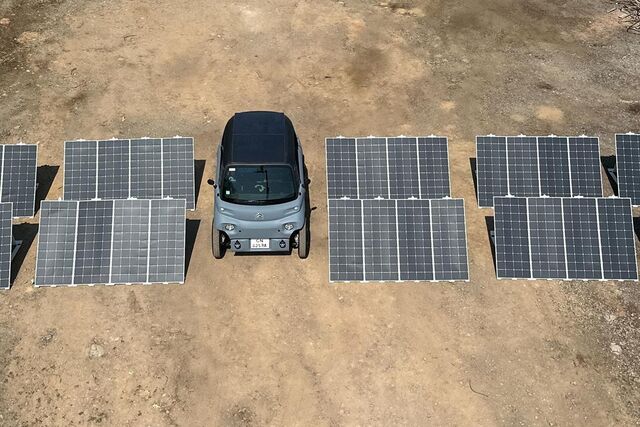
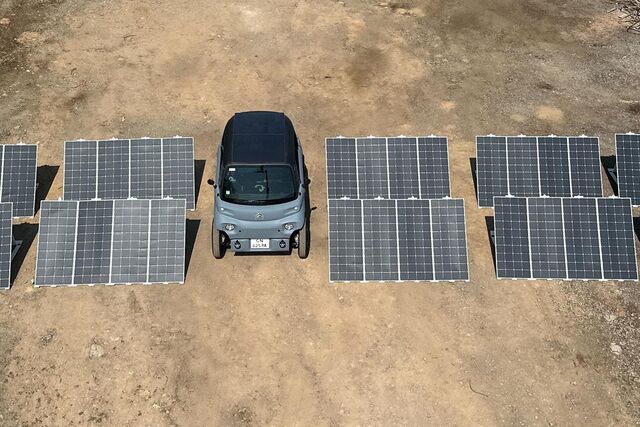
After a 4-month journey covering more than 16 000km from Morocco to South Africa, the four fully-electric Citroën Amis, La Croisière Verte (Green cruise), have successfully completed their expedition, proving the feasibility of micro-mobility and electrification across diverse terrains.
Share with friends
Powered solely by renewable energy, this expedition has not only demonstrated the strength of electric vehicles but has also reinforced Stellantis MEA's vision for a more sustainable and accessible mobility future.
A century after André Citroën’s legendary expedition, La Croisière Verte has redefined long-distance travel by relying exclusively on green energy. Departing from Ouarzazate in Morocco, on 28 October 2024, the convoy of four specially modified Citroën Amis crossed 16 countries before reaching their final destination in Cape Town on 28 February 2025. With no carbon emissions, this journey stands as a world first, highlighting the potential of electric mobility even in the most challenging environments.
Samir Cherfan, Chief Operating Officer of Stellantis Middle East & Africa, stated: "This expedition embodies the core values of Stellantis MEA—innovation, sustainability and accessibility. By proving that electric mobility is viable even in the most challenging conditions, we reinforce our commitment to a cleaner, more sustainable future for mobility across Africa. With Eric and his team’s success, La Croisiére Verte is a milestone that will inspire further advancements in electric transport across the region."
The Citroën Ami's success in covering this vast distance demonstrates the reliability and efficiency of electric technology. Travelling through Morocco, Mauritania, Senegal, Guinea, Ivory Coast, Ghana, Togo, Benin, Nigeria, Cameroon, Gabon, Congo, the Democratic Republic of Congo, Angola, Namibia and South Africa, the expedition demonstrated that electric mobility is not just a concept for urban environments but a practical solution for global transport needs.
Key milestones of the adventure include:
123 days of travel with 123 stops in villages, cities and remote areas.
32 impactful meetings with local initiatives, universities and renewable energy experts.
A proof of accessibility: If a small electric vehicle like the Citroën Ami can cover this distance, electric mobility can adapt to anyone’s needs.
By successfully crossing Africa in a compact, fully electric vehicle, Citroën Ami has challenged perceptions of what is possible with sustainable mobility.
A dispute over the payload ratings of Jetour’s T1 and T2 SUVs has developed further following weighbridge testing in Gauteng, with the Automobile Association (AA) questioning some of the results and Jetour South Africa maintaining that its revised figures have been independently verified.
Chinese vehicle manufacturers continued to record significantly stronger growth than established OEM brands in South Africa during the second quarter of 2026, according to TransUnion's Q2 2026 Mobility Report.
Cars are the ultimate symbol of freedom, independence and individualism. They offer the freedom to ‘go anywhere,’ whenever it suits and with whom one chooses.
South Africa's new energy vehicle market is becoming increasingly diverse, with plug in hybrid electric vehicles (PHEVs) and fully electric vehicles gaining ground while traditional hybrids remain the largest category.
As South Africans celebrate their rich heritage, it is also worth reflecting on a lesser-known chapter of the country's history: its long connection with electric vehicles (EVs).