Africa’s leaders back electric mobility as global EV sales surge
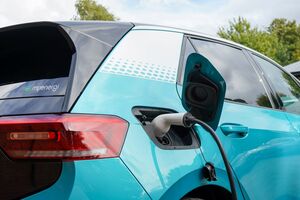
Electric mobility has reached a decisive turning point, with the International Energy Agency’s Global Electric Vehicle Outlook 2026 reporting that nearly 30 percent of all new cars sold worldwide this year will be electric.
Share with friends
Volatile oil prices have accelerated the shift, pushing consumers and governments to move away from fossil fuels and embrace cleaner alternatives.
This global momentum is being matched by Africa’s leadership. At the African Union’s Transport and Energy meetings, ministers formally adopted the Johannesburg Declaration, a landmark accord that cements the continent’s collective commitment to accelerate infrastructure development, expand energy access and advance sustainable mobility.
The declaration is backed by the official endorsement of the Continental Framework on Electric Mobility in Africa, a policy designed to align member states behind a unified transition.
“The Johannesburg Declaration proves Africa’s leaders are aware of the importance of the electric mobility transition for Africa,” says Hiten Parmar, Executive Director of The Electric Mission. “South Africa must not only keep pace with its continental counterparts but translate commitments into local action.”
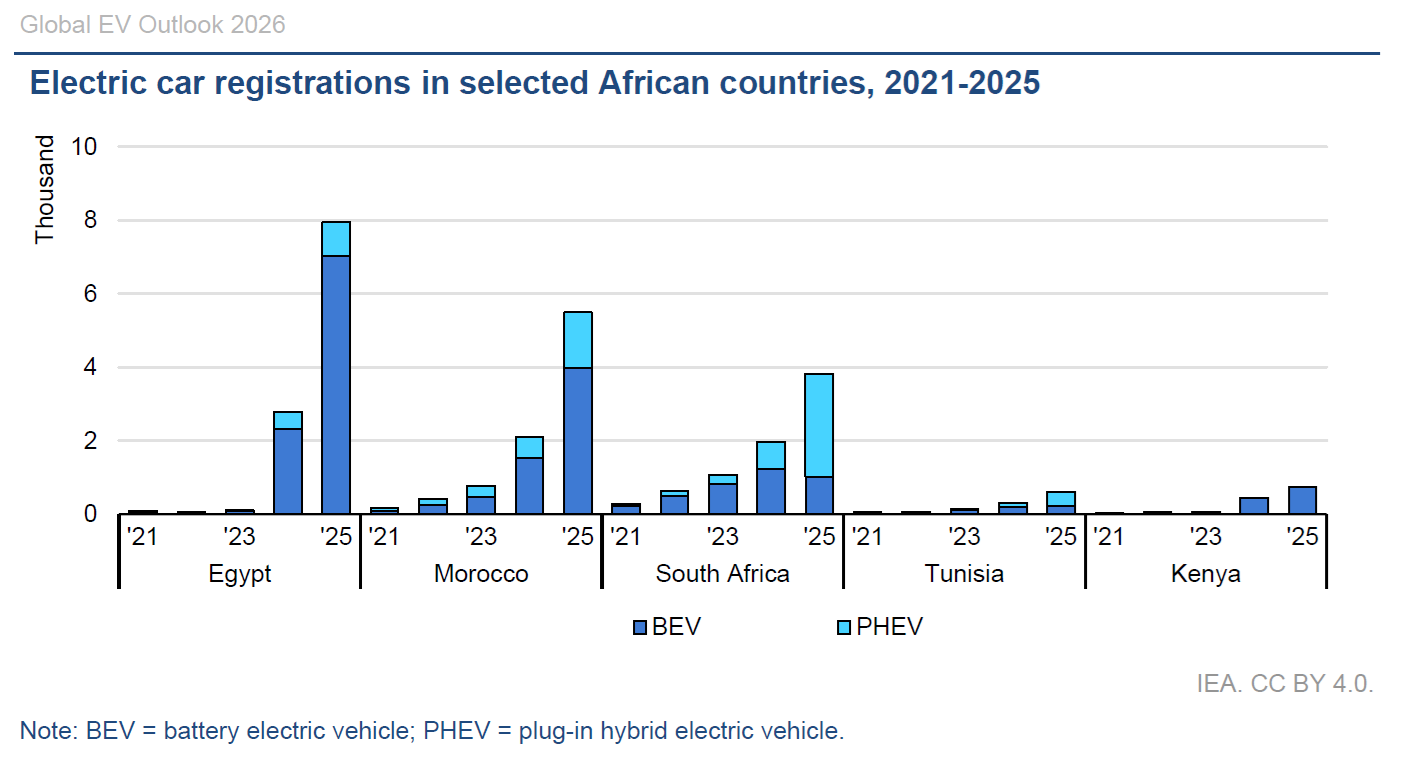
The IEA report highlights that despite policy adjustments in some markets, the momentum towards electric vehicles is spreading rapidly into developing regions. Recent geopolitical instability in the Middle East has further encouraged consumers to choose electric vehicles to avoid unpredictable fuel costs.
Outside of China, first-quarter data for 2026 shows sales rising by 80 percent in the Asia-Pacific region and 75 percent across Latin America. Global EV sales are expected to reach 23 million this year, with the worldwide fleet projected to surge from 80 million today to 510 million by 2035. Electric truck sales doubled last year, while two- and three-wheelers are becoming the dominant form of cleaner transport in emerging economies.
“As battery costs continue to decline, and manufacturing becomes more cost-competitive, electric vehicles become more attractive to the market,” Hiten notes. “The Johannesburg Declaration and the endorsement of the Continental Framework on Electric Mobility in Africa signals an opportunity for Africa to leapfrog into electric mobility, along with renewable energy.”
African leaders have also recognised the continent’s reserves of energy transition minerals as a strategic advantage. These resources are vital to the global battery boom and could underpin a sustainable, localised supply chain across African Union member states.
“There are key actions necessary for South Africa to transform its automotive industry and capitalise on our export markets and the industrial opportunity presented by the transition to electric vehicles,” he adds.
“The local automotive industry must transition to producing zero emission vehicles urgently in the lead up to 2035, a priority timeline for the European Union market as well as the ambitions for the South African Automotive Masterplan. The national Integrated Resource Plan must be put into action for additional energy capacity and technology transition. Finally, prioritising a local framework for fuel efficiency, or vehicle emission standards remains imperative for the domestic market,” Hiten says.
The African Union is actively aligning under the Continental Framework on Electric Mobility, but the challenge for South Africa lies in leveraging its industrial base, geographical position as a gateway to the continent and the mandate of the Johannesburg Declaration.
A dispute over the payload ratings of Jetour’s T1 and T2 SUVs has developed further following weighbridge testing in Gauteng, with the Automobile Association (AA) questioning some of the results and Jetour South Africa maintaining that its revised figures have been independently verified.
Chinese vehicle manufacturers continued to record significantly stronger growth than established OEM brands in South Africa during the second quarter of 2026, according to TransUnion's Q2 2026 Mobility Report.
Cars are the ultimate symbol of freedom, independence and individualism. They offer the freedom to ‘go anywhere,’ whenever it suits and with whom one chooses.
South Africa's new energy vehicle market is becoming increasingly diverse, with plug in hybrid electric vehicles (PHEVs) and fully electric vehicles gaining ground while traditional hybrids remain the largest category.
As South Africans celebrate their rich heritage, it is also worth reflecting on a lesser-known chapter of the country's history: its long connection with electric vehicles (EVs).